Michael Johnson: ‘25!
Eileen: Mike, I am really excited to interview you. I really admire your work: your commitment to perception, your freedom in gestural mark making, and that self portraiture is such an integral part of your painting practice. It is that way for me, as well. For me, self portraits are something I started doing in grad school and it was partly about being able to paint a figure from life without having to rely on a model. However, it is also something more than that, that I have never been able to quite put my finger on. I know that part of it is practical, and that has to do with the immediacy of setup: not choosing what I am painting, not rifling through my still life objects and carefully setting up a scene, not choosing a location to go to in order to paint a landscape. With self portraits, I sit down (or stand) in front of the mirror, and I paint what I see. The harder part to identify is what goes beyond the practical–self portrait as a motif, an account on the daily self, perhaps. I am wondering if you could talk about your relationship with self portraits–what compels you to do them, what they do for your practice, how you see them in relation to the rest of your work.
Michael: My relationship with self portraits goes all the way back to when I was twelve or thirteen. I began drawing and modeling clay as a three year old. I'm not sure what it was I had seen. We lived in Oregon back then for a few years and there was a Van Gogh show there. I remember seeing those amazing self portraits. There was also a PBS Gauguin presentation I remember being really exciting. It was the solitude and the mirror and the discovery that somehow the more you did, the more you learned.
What happens now is that the urge or need to do self portraits comes and goes. I might not even think about them for weeks, even months and then something will happen, triggering a new batch. At this point it's very recognizable, reentering this process. I think that the most interesting aspect of this activity for me is that, after doing so many, I seem to have built in rules about when to stop and when to keep going. These are hard and fast rules that usually mean something to the effect of, “nothing is easy.” Waiting and plodding is essential, looking and recording. When a certain almost undefinable sensation arrives, the work is done. But it's not an easy or predictable process. The finished work is not necessarily at its most handsome or easy to look at. Something else takes over. Something about painting and also a certain kind of drama.
Eileen: I get what you mean about the urge to make them, and I think I have this same thing–like a calling to stop and regroup, and somehow, doing that is through self portraiture. I sometimes also think that it has to do with some kind of confrontation with myself, but also a reconnection with perceptual painting. What do you suppose triggers this urge in you to make self portraits? And with respect to what you said about working them out over several days, when you re-enter a self portrait, does it matter to you that it is the same light conditions and such?
Michael: What sparks a new set of self portraits? With the new ones and it's never just one portrait, it’s a switch to a completely different mode with different design concerns. The most recent two came about just as I was finishing the painting called Jubilee, the last of the 17 paintings in this current show. I like to alternate and keep both kinds of painting going, like a juggling act. Jubilee was almost a complete surprise to me. Nothing like my usual compositions. I was very happy with it and somehow that made me want to do some portraits. The last thing I wanted to do was imitate this Jubilee painting.
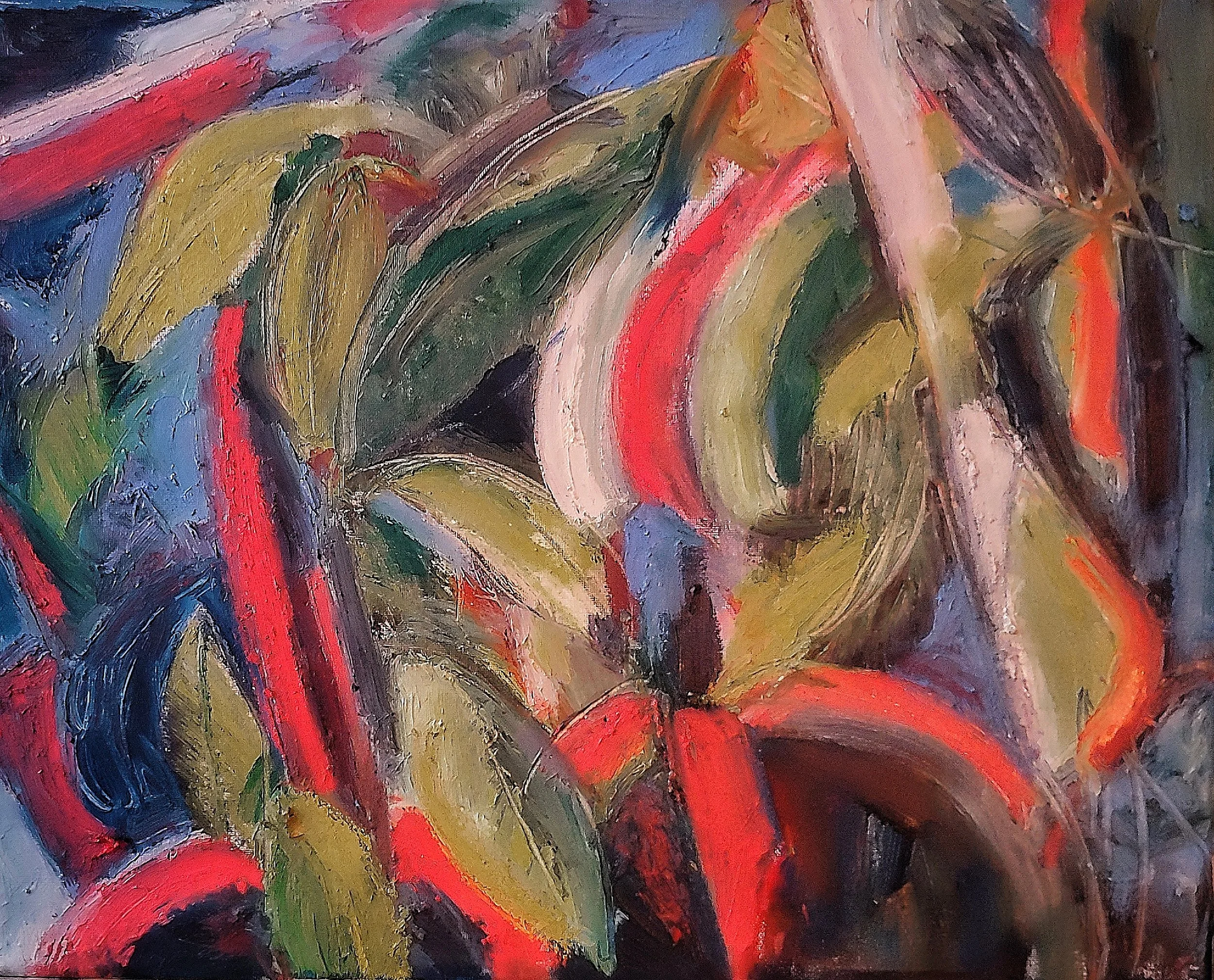
Michael Louis Johnson, Jubilee, Pigment Stick (oil) on Canvas, 16x20 inches, 2025-6.
Better to let it settle in my mind. So these two new ones have a quality I look for sometimes. There's a certain roughness and even a smudged look to parts of the painting that I like.
Most important, though, is to adhere to an undefined but recognizable facial aspect. This look comes over time with thoughts like, “The eyes are too high or too close together,” or, “The width of the base of the nose is wrong,” or, “The forehead is wrong for where the ears land, or, “The overall shape is too much of a circle!” Having these thoughts and acting on them. Being uncompromising in a way. Breathing life into the image.
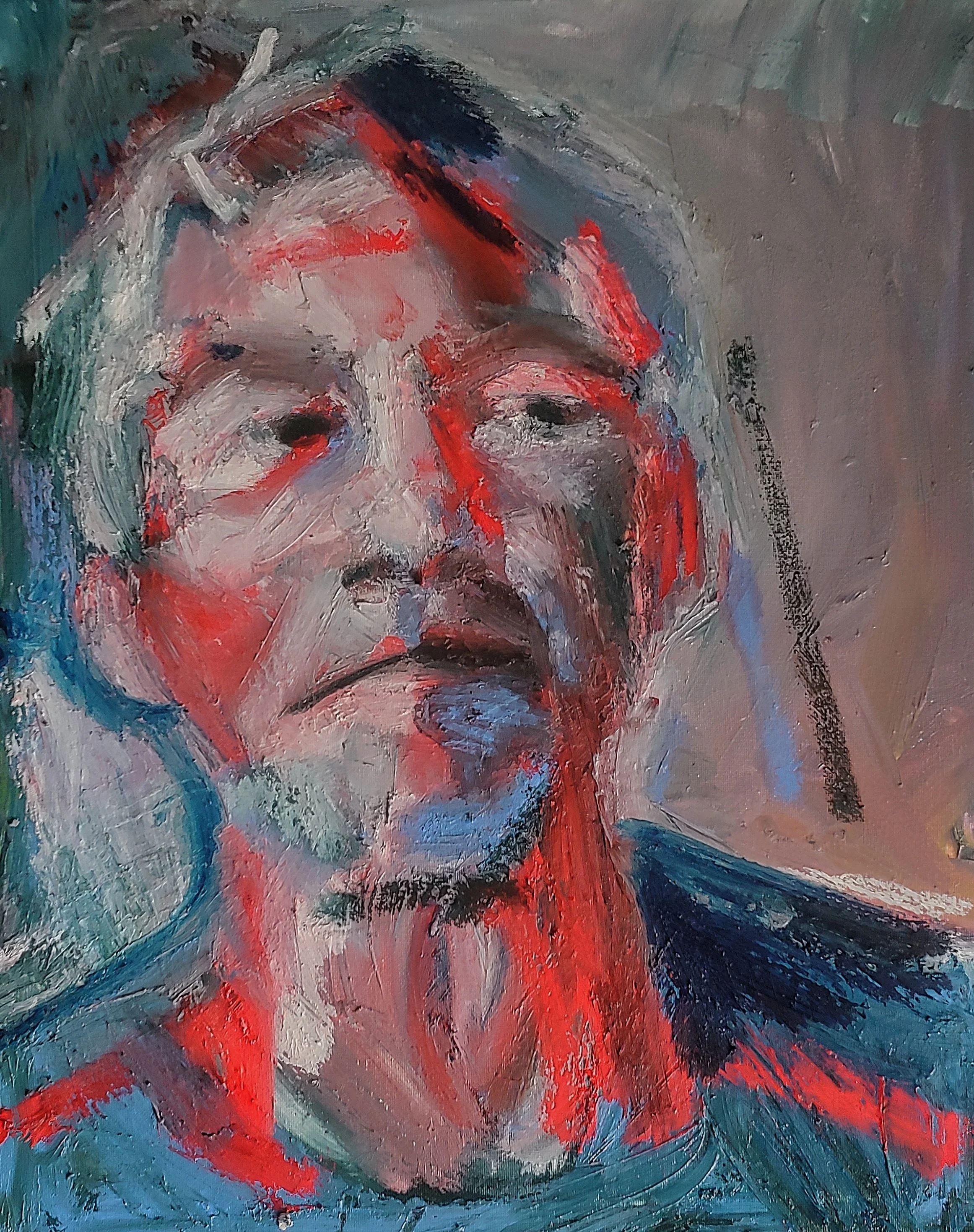
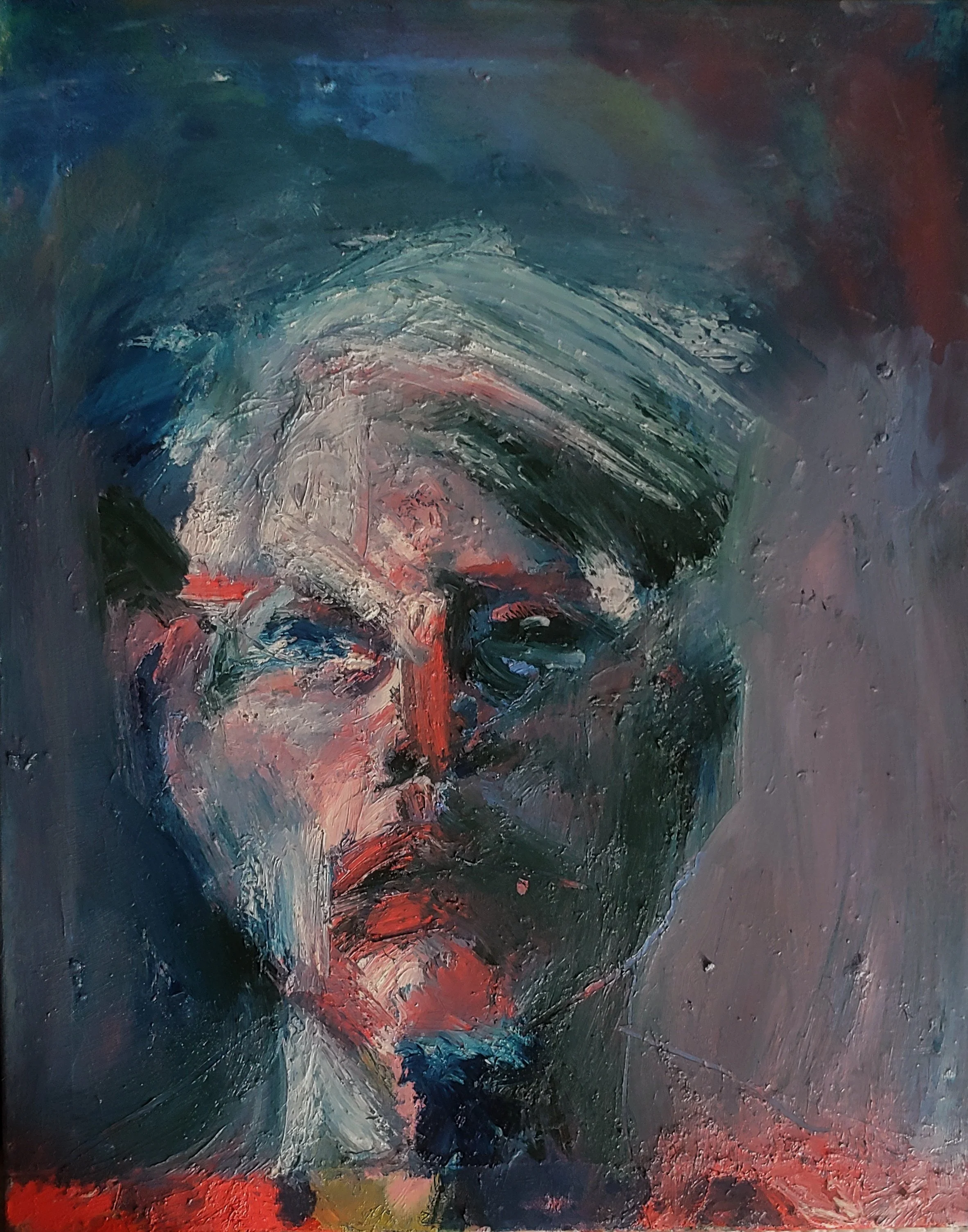
I think my ideal time of day for working is early morning. Not completely because of the morning light though. Equally as important is my state of mind as I wake up looking at the painting in progress. Nothing is precious at that time of day. If much of what's there has to be redrawn, so be it. There are no fake pretenses and with time, making radical changes gets easier. After all, that's part of the major fun of painting. Pushing an image all the way to the point where a little click occurs and the painting works!
Eileen: Okay wow, you have given me a lot to think about. So firstly, these two self portraits are not in the show…or are they? You mentioned that Jubilee is the last of the 17 paintings, and these came after that one. I have to say that these self portraits are very inspiring and are reminding me of rules, or a way of being, that I forgot about, and I thank you for sharing these. Okay, so what I am hearing from you is that one way that the self portraits function in your painting practice is that they help you keep yourself from trying to imitate the energy, composition, whatever the magic combination was in a successful painting that you were just working on, in this case, Jubilee, so that you can move on to the next one more authentically. I think that is really fascinating. Returning to self portrait is like creating closure to a particular kind of energy that you’ve poured into a painting or body of work that you wish to keep sealed within that work, and in order to make the next piece be equally as vital and original. It almost kind of feels like how Stanley Lewis and others use the rest of the paint on their palette to make a mini version of the painting they’re working on–to use up the resources that are there and close out the day. You’re doing it metaphorically, and transitioning the energy from one painting experience into self-portrait energy, in order to reset for the next piece. Does that sound right?
Michael: I tend to work in series. This show's seventeen paintings all have to do with 2025. The series contains both self portraits and scenes from life. The two I've referenced here are the beginning of something new, a new group. What pulls me back into this kind of painting are fond memories of self portraits done in the past.
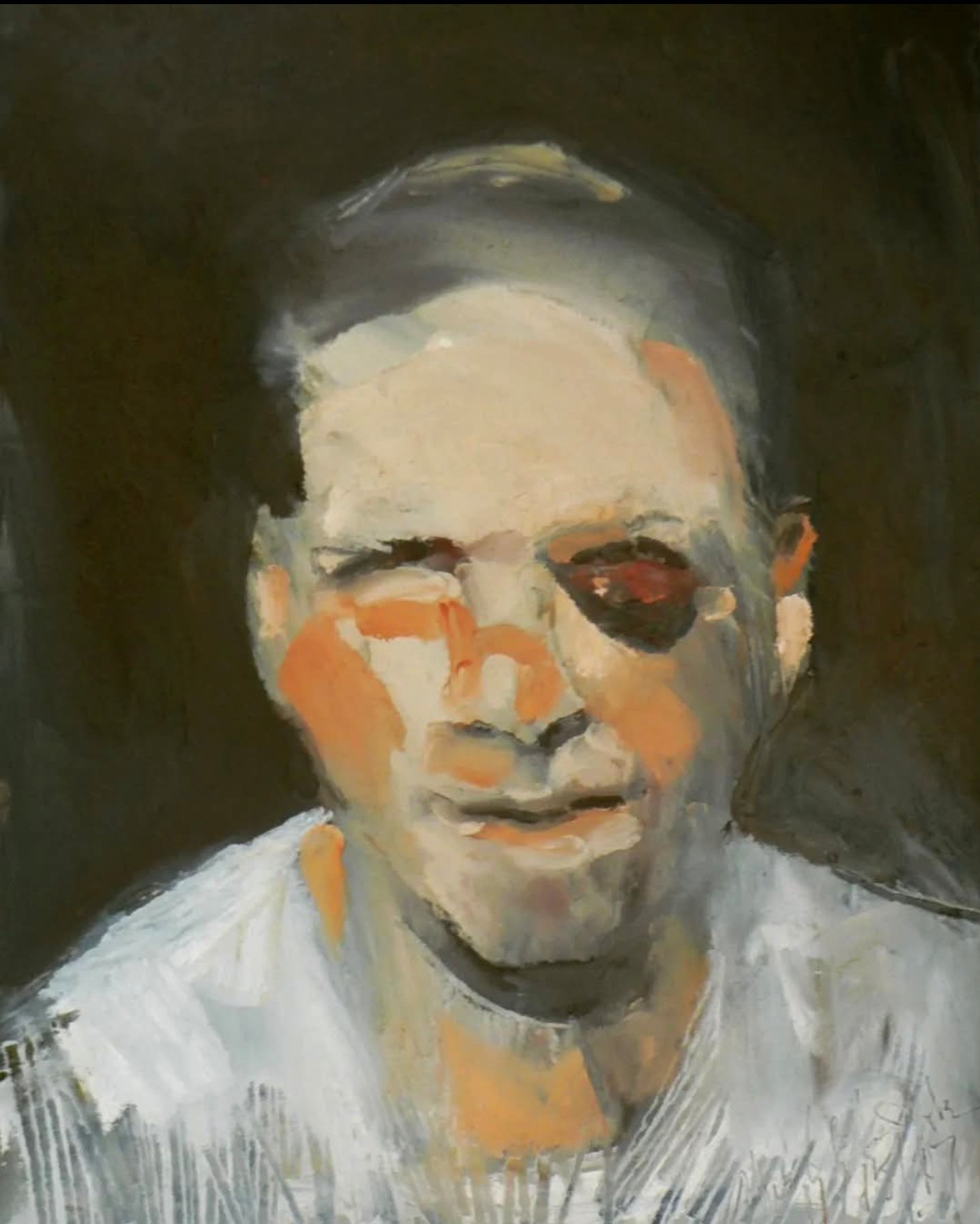
Michael Louis Johnson, S. P. with Black Eye, Pigment Stick on Paper, 14 1/2" x 11", 2020.
This is one from maybe nine years ago, S.P. with a Black Eye, that I'll always remember as a wild unanticipated experience. I was hiking down to the high 150's with my dog Jax to pick up some Korean BBQ for the family. I slipped on some ice on Broadway on a cold December night and smashed my face into one of those circular steel bike racks. I came away with a black eye. Painter friends on Facebook urged me to paint myself with the injury. Again it took several days to arrive at this image. Photos of attempts with different looks still reside in my photo files. But when I hit this version there was a bit of an internal physical shudder. Time to stop. I will burn out on these. My friend Diane, also a painter, once asked me why I didn't focus solely on these portraits. She really liked them. My feeling is that they take a certain toll in the making. There's a feeling of psychic exhaustion after devoting time on these that's different from landscape painting. Things get very introspective and at times painful.
Eileen: I love that you took their advice and made this painting. It’s fabulous! I can completely relate to the idea of being pulled back into self portraits because of fond memories from having done them before–I do that, too. And I relate to what you say about the introspective element–that’s sometimes why I avoid them (haha!). I have found myself wanting to make one, and then I sit down and look at myself in the mirror and think, “Not today.” And so I do something else.
On that note, I would love to hear you talk about your landscapes. Some of them seem to have a downward perspective, like August, while others have a “through” perspective, like Park Bench With Thick Red Line. I am also reflecting on the beautiful sketches that you post on instagram. I know these won’t be in the show, but I’m wondering whether you work off of those to make your paintings. Can you share about your overall process with these?
Michael: I have been painting both: inside looking out, and outside–as in plein air–for years. Back in the late 70's, through the 80's and 90's. I was living on West 106th Street aka Duke Ellington Blvd. Even then I painted constantly. This is one I still have from that time.
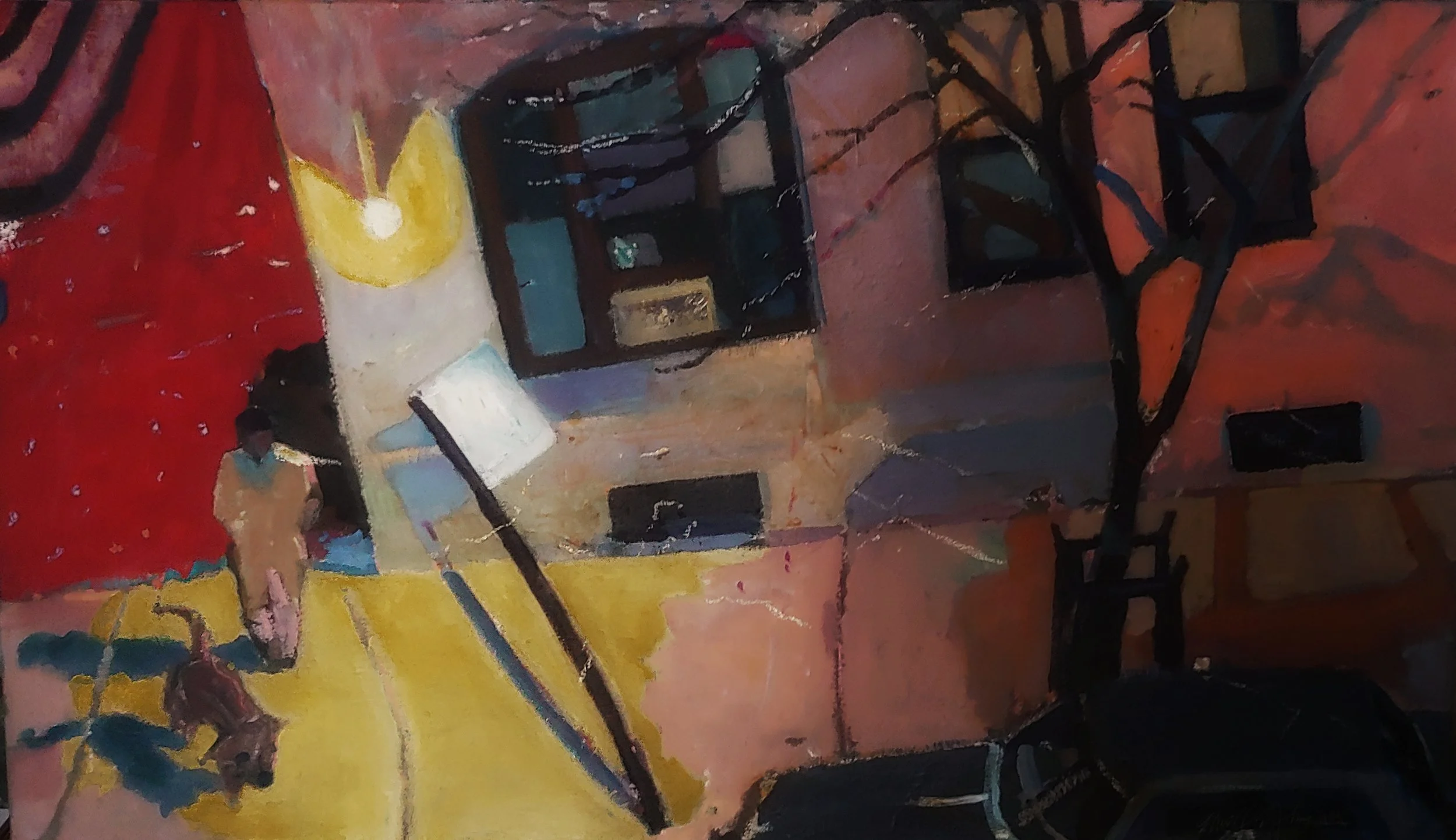
Michael Louis Johnson, Last Walk of the Day, Lascaux Acrylics on Canvas, 26" x 48", 1989.
I was living in a third floor apartment facing south between Broadway and Amsterdam Avenue.
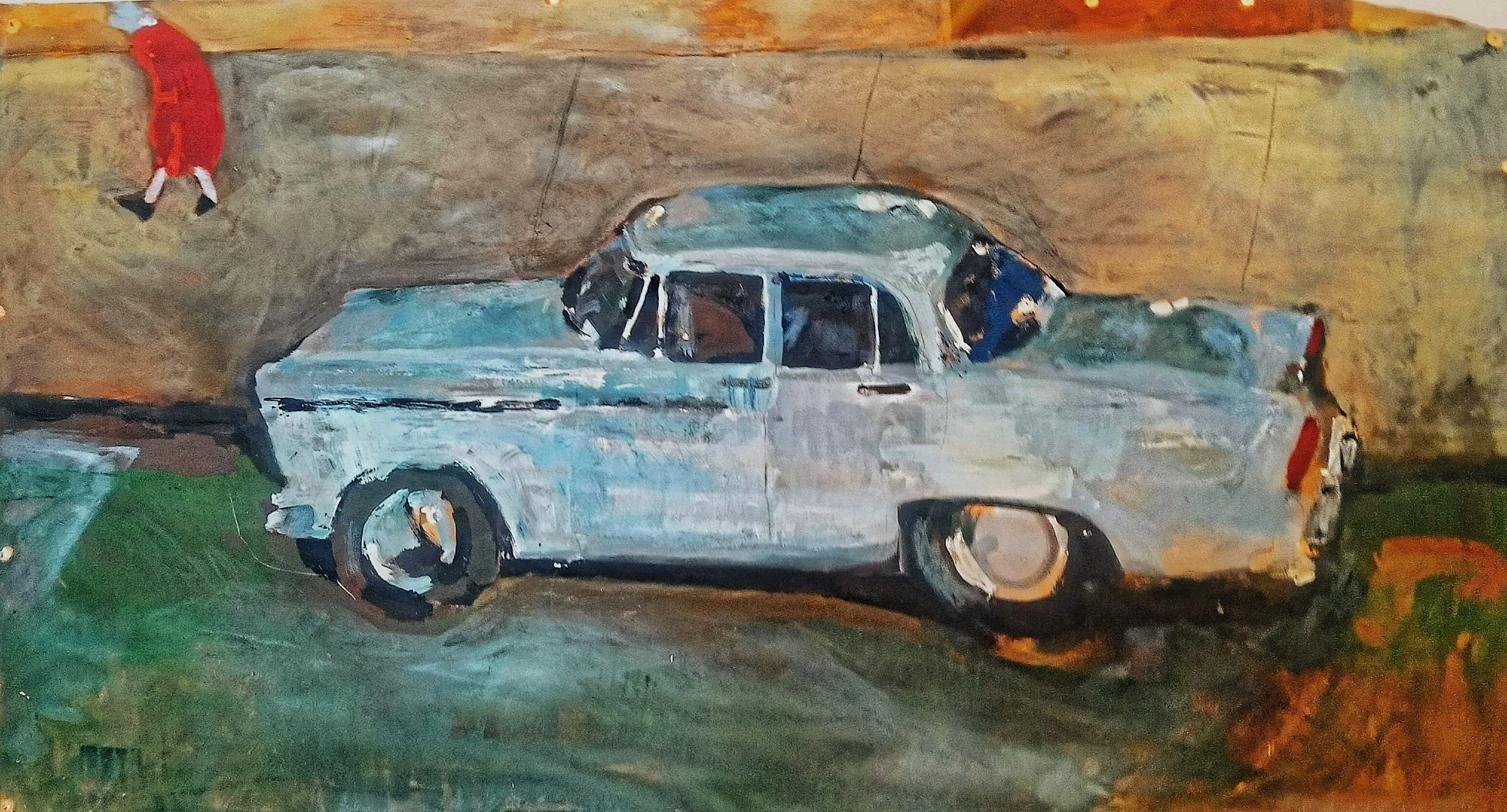
Michael Louis Johnson, Woman in a Red Coat, Casein om Paper, 24" × 46", 1984.
I painted this view with parked cars and the stoops and doorways over and over at different times of day, different times of year.
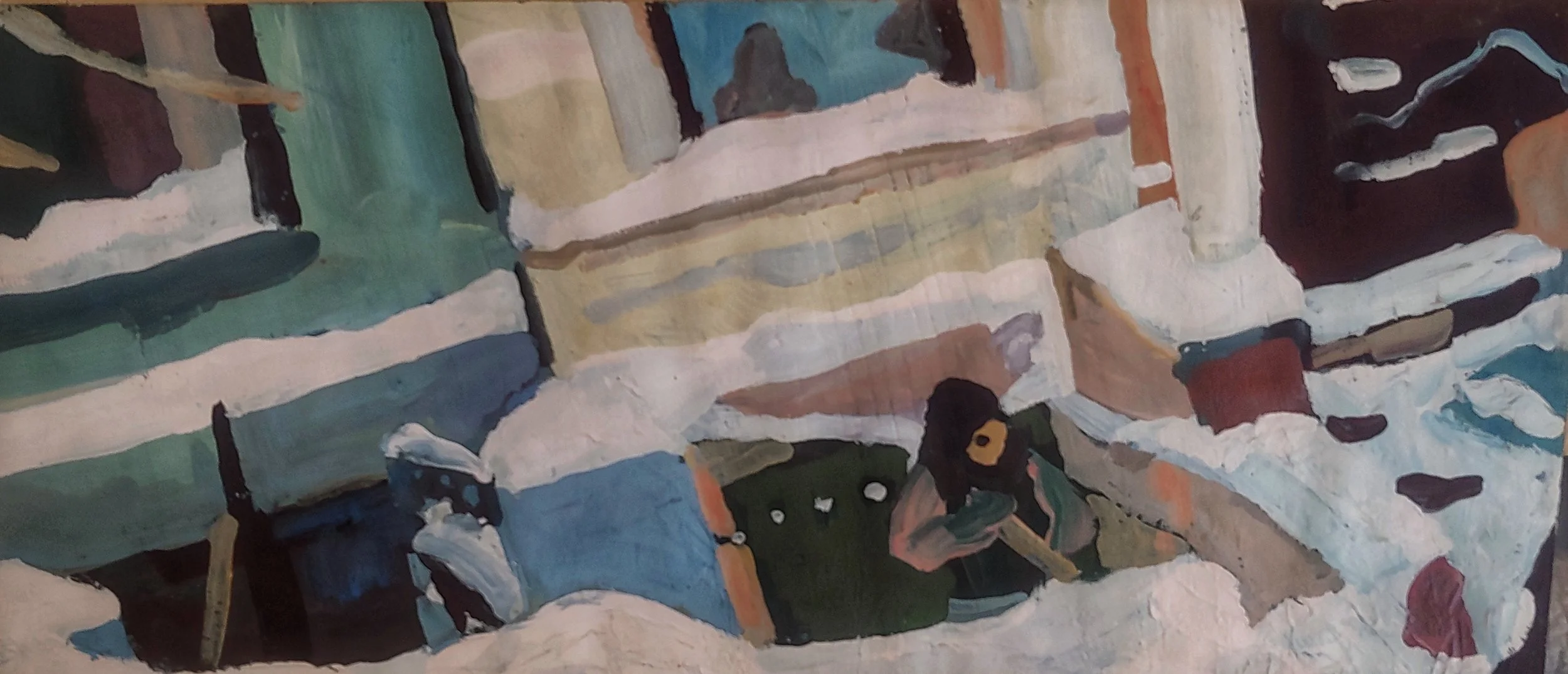
Michael Louis Johnson, Snow Day, Casein on Paper, 11" x 24", 1995.
So in a sense, what I do now is a continuation of that kind of thing, taking into consideration the changes I have gone through as a painter. I'm no longer solely a literal figurative painter, if I ever was. I like to invent on the surface. I like to challenge the viewer.
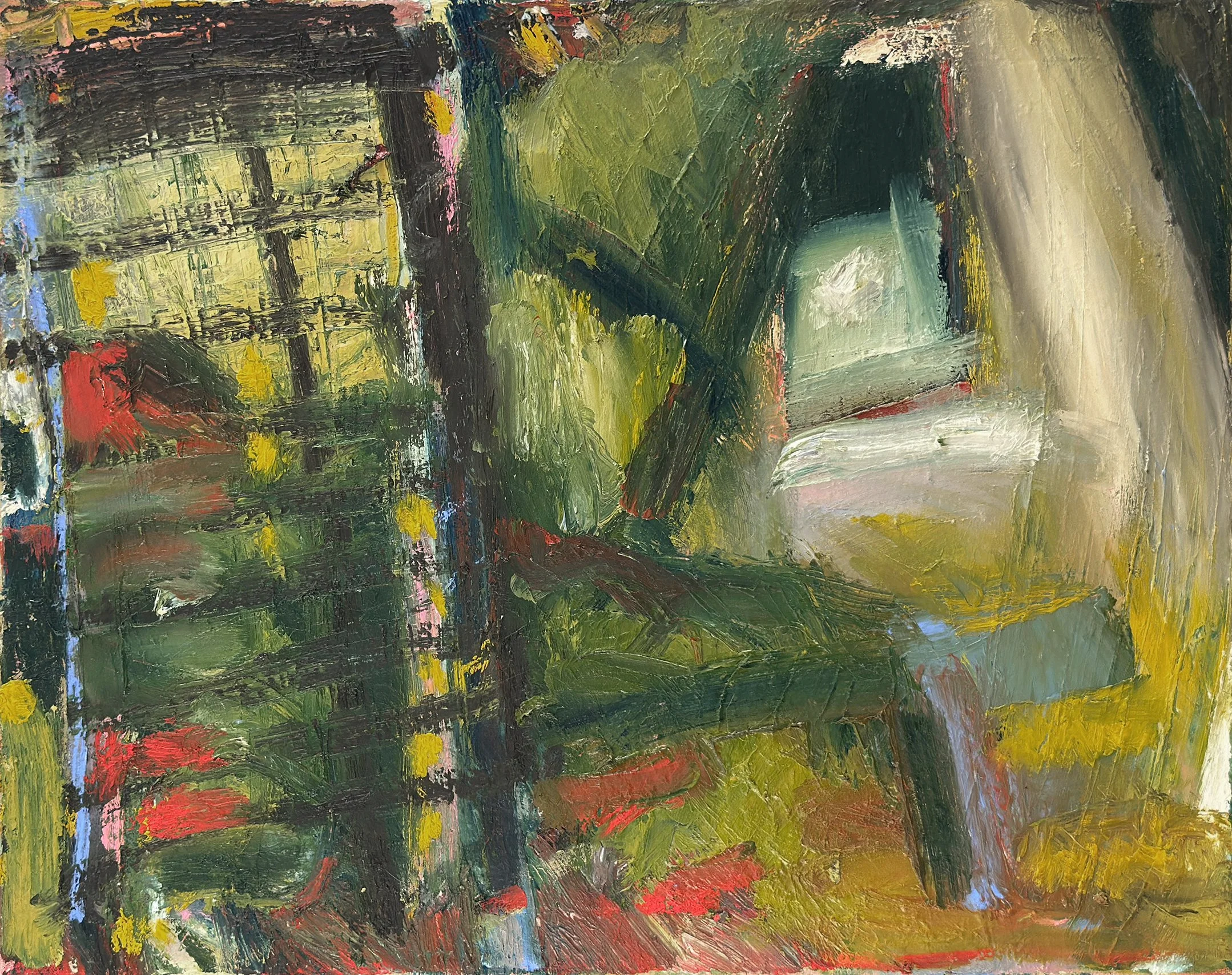
Michael Louis Johnson, Rough Screen, Pigment Stick (oil) on Canvas, 16x20 inches, 2025.
Let part of the painting be recognizable shapes and color, and at the same time, another element of the painting is drawing; outlines of things that belong there. A new wrinkle for me has been going out to draw in Ft. Tryon Park. I found an empty sketch book at the local Buunni coffee shop maybe almost a year ago. The idea of filling it up with drawings was irresistible.
Eileen: A found sketchbook–that is enticing. Is that what you are using for all of those recent sketches that you’re sharing on instagram?
Michael: This was an igniter of sorts. As a sketchbook it was to its credit, filled with empty, untouched pages. It was perhaps way too small. It got me started again drawing outside. As I said, I'm on my fifth or sixth book since I started these latest books. I'm using Talens books size 11 ½” x 8” and currently making 16” wide drawings well suited for the park and the Hudson.
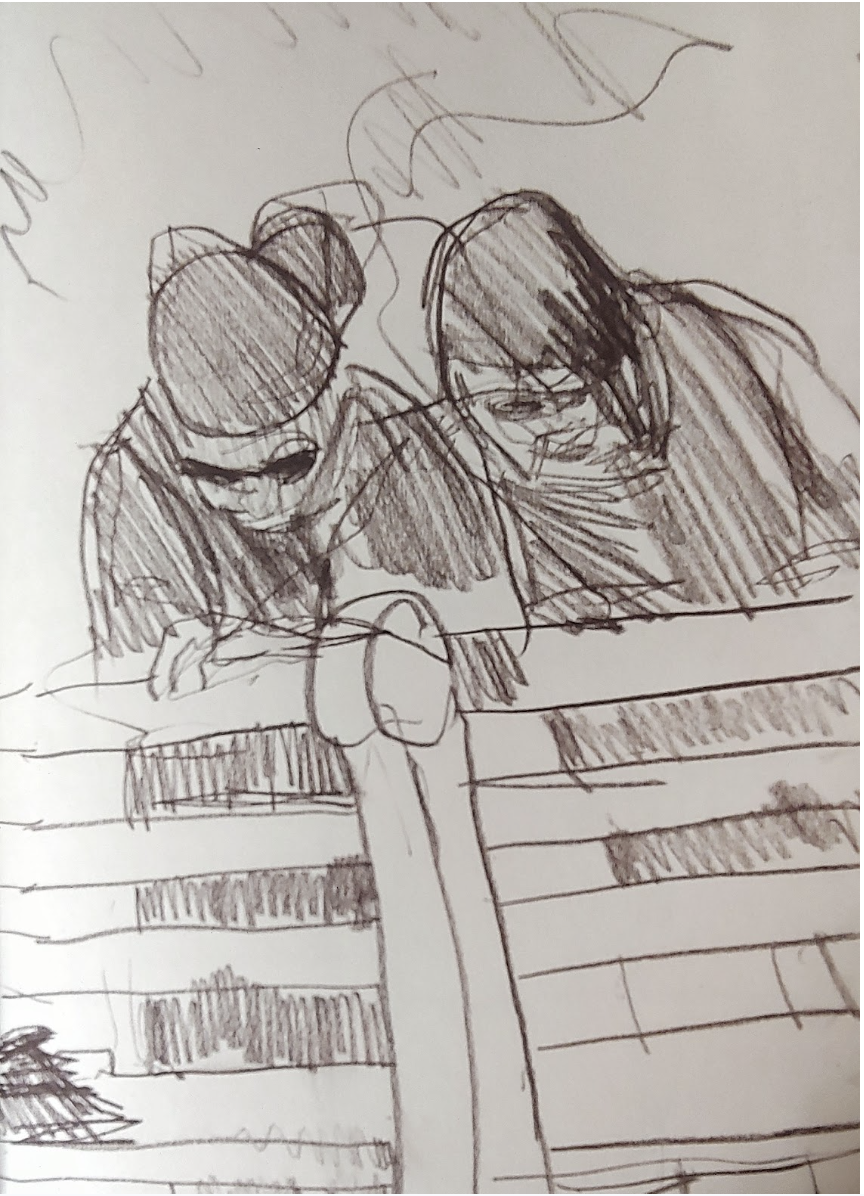
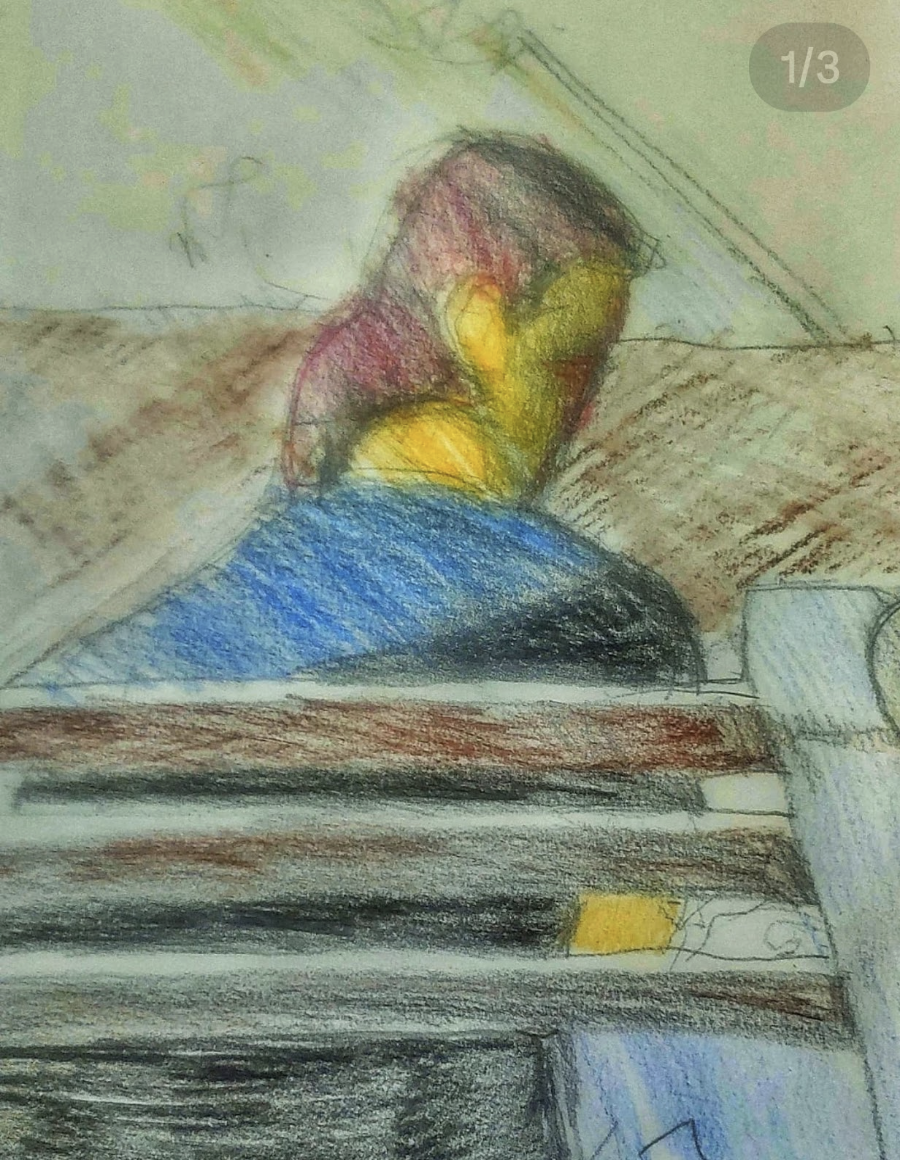
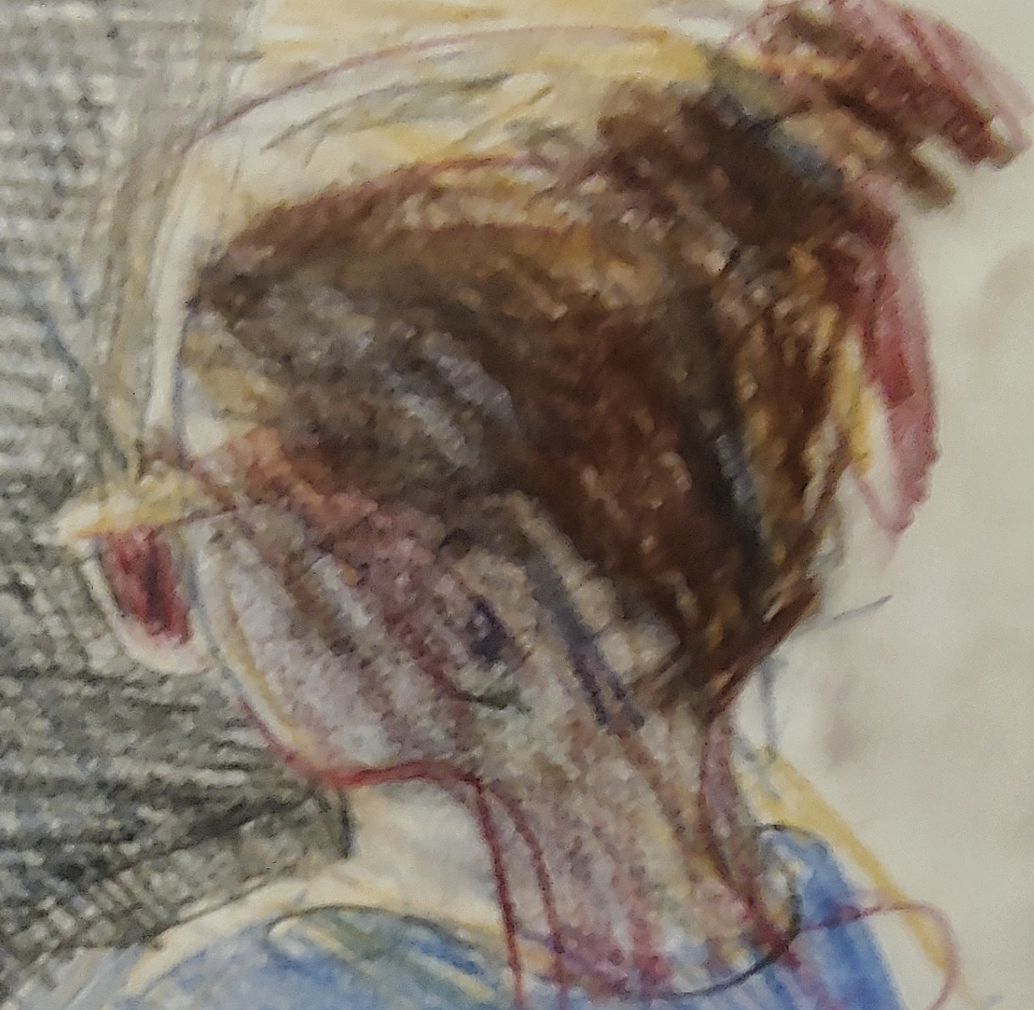
Then when it got too cold it became landscapes, the heather garden.
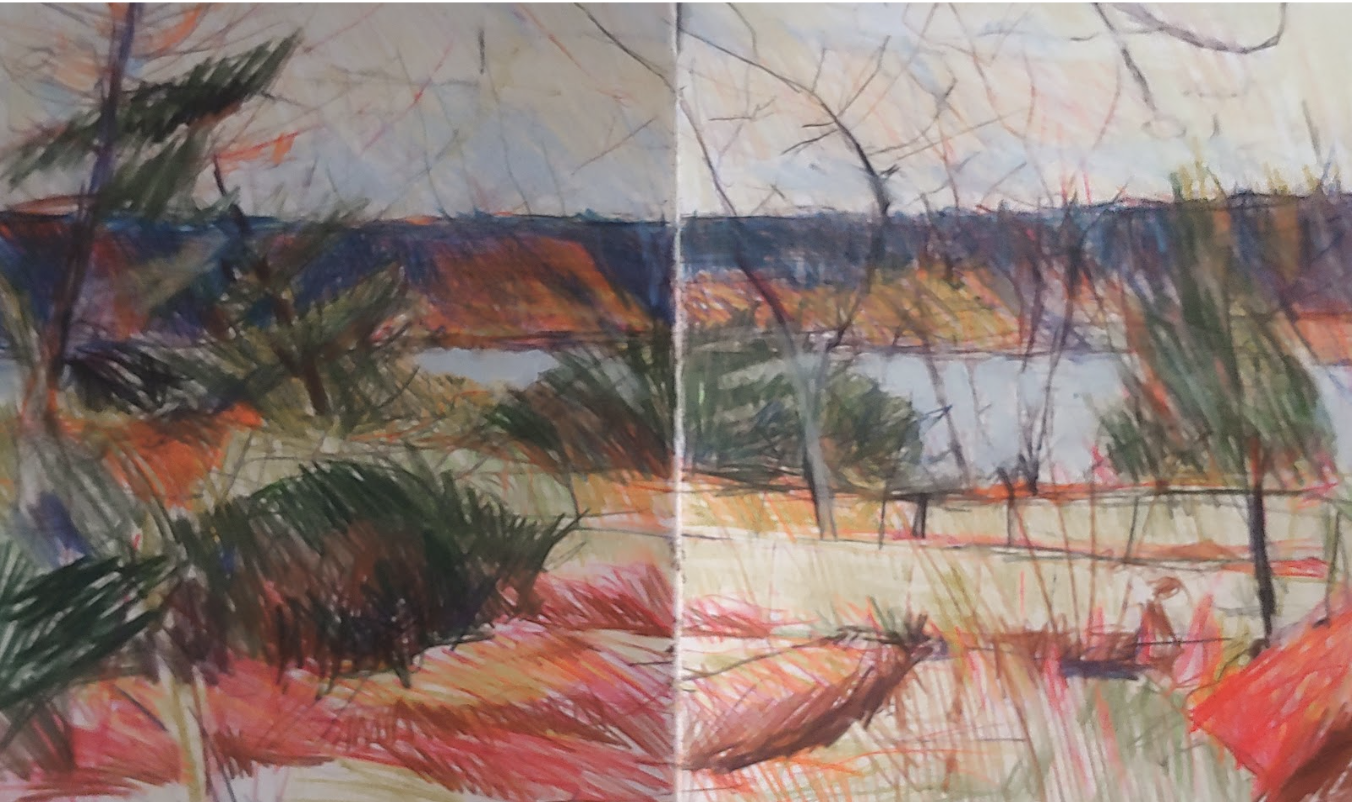
Michael Louis Johnson, sketchbook drawing, 2026
It's a regimen now. Twice a day weather permitting.
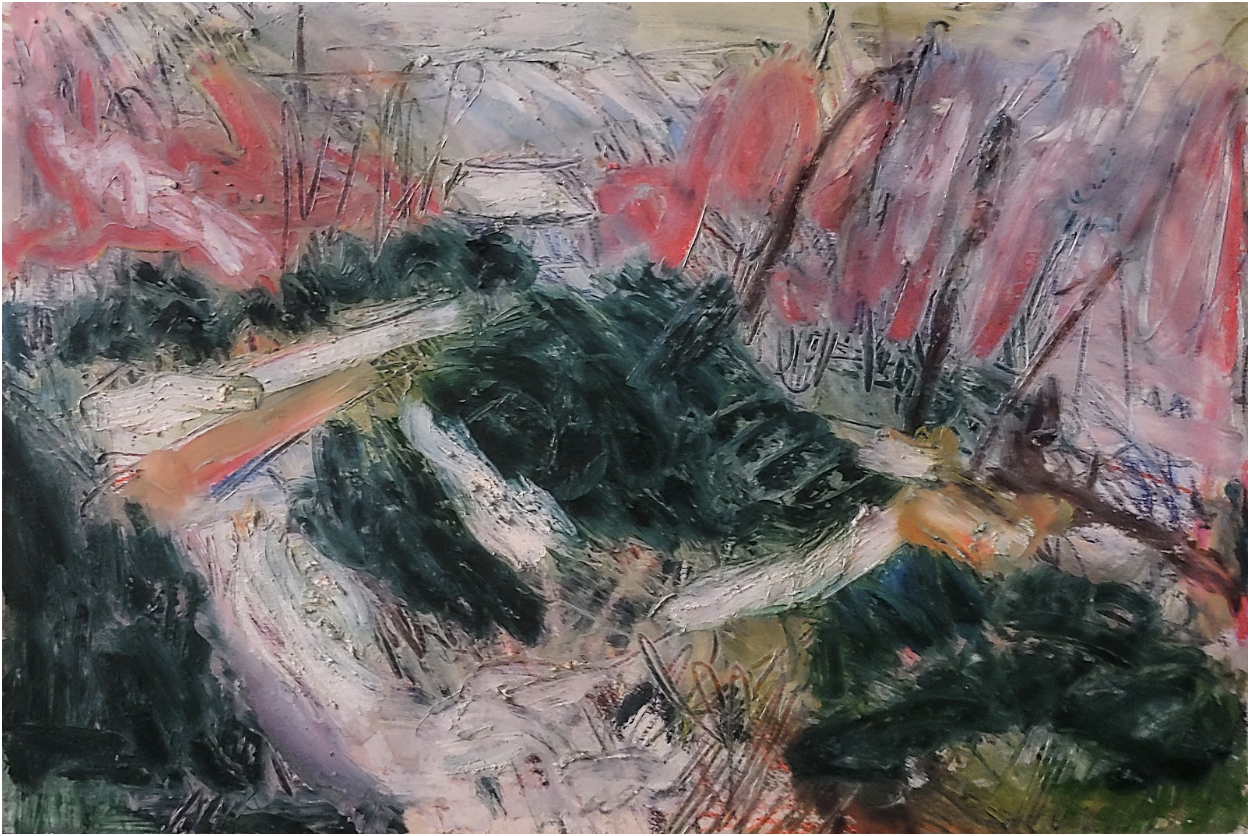
Michael Louis Johnson, sketchbook drawing, 2026
I'm on my fifth or sixth book. Charcoal, graphite, and colored pencils. The Heavy Red Line painting above came out of these drawings.
Eileen: Lastly, I am wondering who you look at. I am going to go out on a limb and assuming that you look at Auerbach, based on both your self portraits and the landscape paintings in this show. Correct me if I’m wrong! I would love to hear who else you look at, and also, in general, who has influenced your work. Are there any particular teachers or mentors who made an impact on you?
Michael: I love and admire so many painters. Here's a short list: Chaim Soutine, Jane Freilicher, Ivon Hitchens, Elmer Bischoff, Richard Diebenkorn, David Park, Joan Eardley, George Bellows, Frank Auerbach, and many more.
I always go back to my Freshman Foundation experience at Rhode Island School of Design as the most powerful influence on my continued work as an artist. Teachers like Brice Hobbs, Gerald Immomen and Garcia Melanson were amazing to be around and to show work to. These were uncompromising teachers who opened up a pathway to continued dedication to art making. Richard Merkin, another RISD professor became a friend when I first came to NYC in ‘71. He was a wonderful mentor for many years, looking at work and even passing along supplies at times. Caricaturist/painter David Levine who was often around during much of my time at the New York Review of Books, and always eager to have a look at work if I had a portfolio at the office.
Eileen: Thank you so much for engaging in this conversation as the blog post for your show. I’ve really enjoyed learning more about your work. Is there anything else that you want to say about your show that we didn’t touch upon?
Mike: Going through the process of this interview has made me realize how deep my attachment to this seemingly lifelong project of art making really is. With everything I mentioned there must be dozens of other examples of other directions. I remember being on business trips and always bringing supplies to turn away from business after the work day, to paint a parking lot in Beverly Hills or a high up view of the rivers and bridges in Chicago. Then there were personal trips: Holland, Equador, Nepal, Western Colorado where I made time to paint.
Somehow I think that all of that activity brings something to bear on this current show and its work. Something adds up. Maybe it's the familiarity or ease with painting. It's never easy but it has become very familiar. And now, as it turns out, I'm blessed with a dog who recognizes me setting up to work outside and parks himself nearby and proceeds to look around and wait patiently.
Eileen: And what could be better than that?
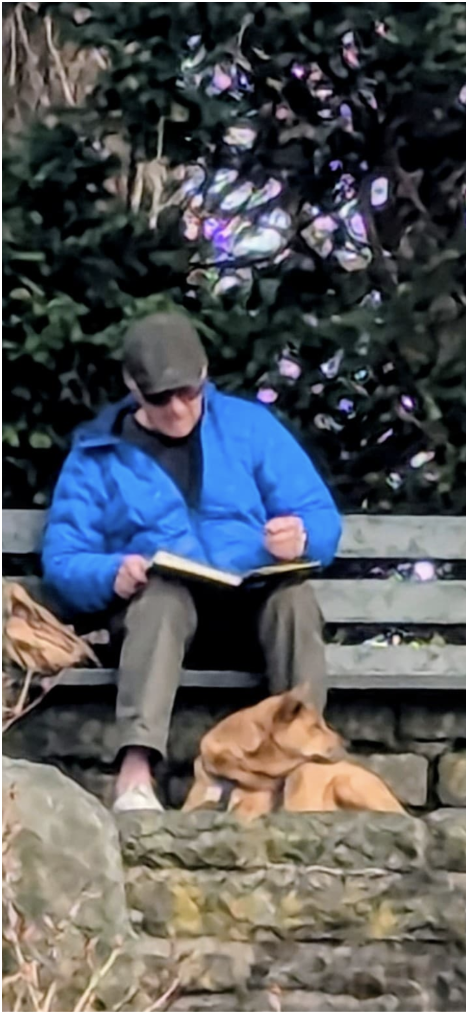
Michael Johnson, sketching on a park bench with Cooper, 2026.
Michael: Years ago as a freshman at RISD, I met a woman named Jill Noss. She was from a farm in Ohio, a storybook kind of person. Her father was a painter and a self schooled aviator. We spent the summer of ‘68 out there near Cleveland. Jill had her dog, Jessy. When school started up again in the fall, Jill had moved on to Vermont, I adopted a dog I called Bob Quin. Bobby was the first. Then came dear Jax. And now Cooper. Single now after 27 years of marriage, Cooper lets my paternal urges thrive and it really is as if he takes notes on what I need from him. He is saintly and just wants to be my buddy and be with me when I work outside. Truly, what could be better than that?
Michael Johnson: ‘25! is on view at Bowery Gallery from March 24 through April 18, 2026. There will be an opening reception on Thursday, March 26 from 5-8pm.