Iris Osterman: Selected Work
Eileen: I wanted to begin by sharing that I am really excited to chat with you about your work. I really appreciate your gestural, sort of guttural response to the landscape. And when I looked at your artist statement on your website, I was particularly struck by the very first sentence: “The tension between representational painting and a more reactive narration of the observed has been a constant underlying theme in my work.” If you don’t mind, I would just love to talk more about that because it strikes me as unusual. I never would have considered using the word narration, but the more that I think about it, the more I feel that it works so well. It actually invites us to understand that while your work may be reactive and immediate, it is not instantaneous. It is processed over time, yet remains fresh. I am wondering if you could maybe say a couple of things about that. Perhaps you could talk about that in relation to By Penobscot Bay.
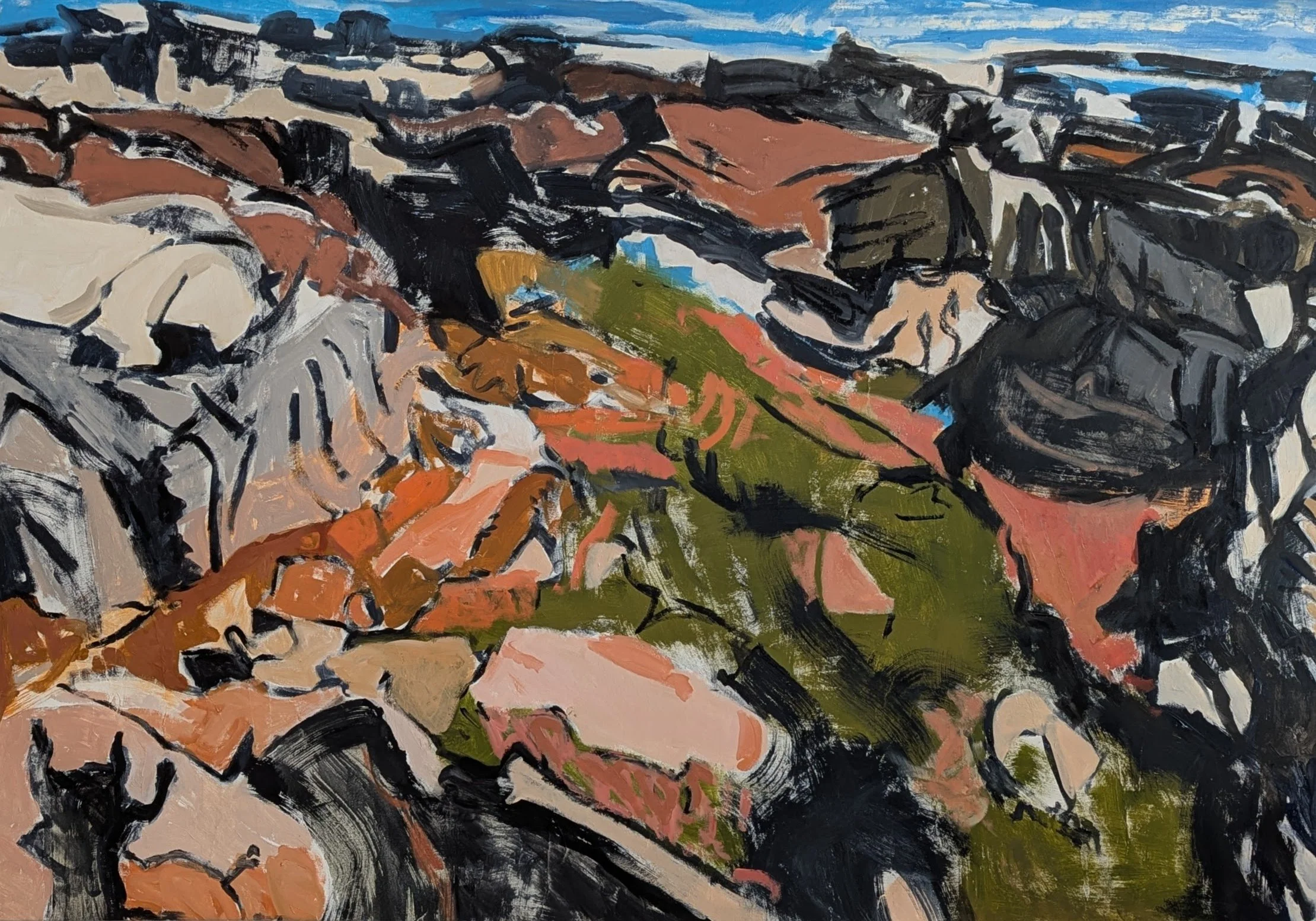
Iris Osterman, By Penobscot Bay, Oil on Canvas, 42" x 60", 2024
Iris: Yes, I suppose the things about landscape that stick with me are not the particular forms - this rock, that sky - but the emotional resonance of the scene. It’s a very difficult thing to translate onto the canvas. And the word “narration” brings up this wish to communicate. In By Penobscot Bay there’s a bit of movement and attention to color, but mainly I am shutting off the rational part of my brain and trying to tune in to what I am taking from the place at the moment. A mentor of mine once told me that when a painting is successful, you won’t remember how you painted it. It’s odd but it’s been true for me.
Eileen: I feel like I’ve heard that from different mentors of mine along the way, as well, and it also rings true for me. I can think of a few pieces where, if I try to make happen again whatever magic took place in my last successful painting, it is almost destined to fail. Because I had no idea what happened. The moment happened. I forgot myself. I painted. And that definitely feels that way with your work. Did I read somewhere that you work on your paintings from a combination of sketches from life and from photographs? I find that incredible–that you incite such vitality and that authentic narrative of your response from the studio. I know we were just talking about how we can’t remember how our most successful work is done, but I am wondering if you could say something about your process–perhaps, for example, with the painting, From Mt. Cadillac.
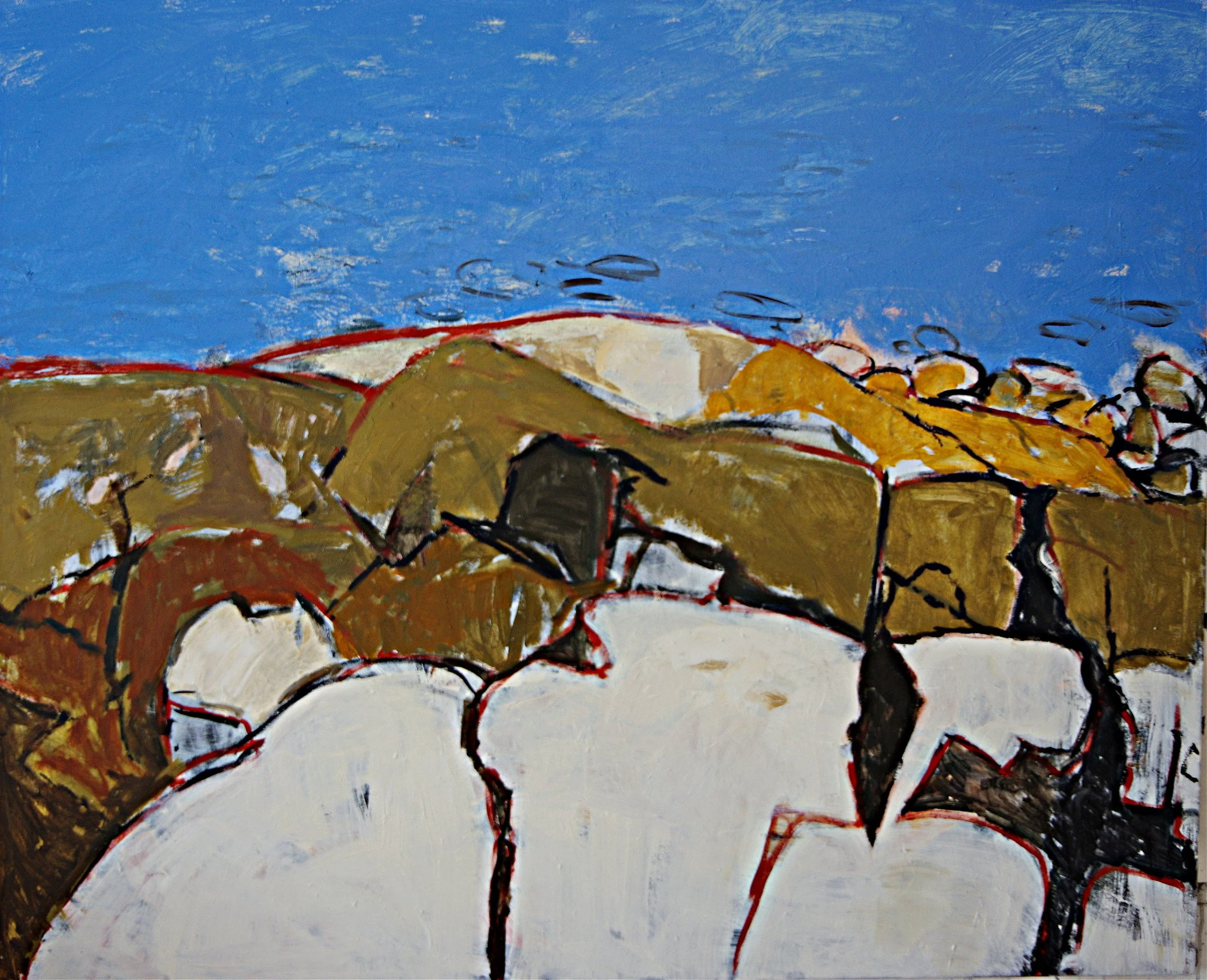
Iris Osterman, From Mt. Cadillac, Oil on Canvas, 44" x 54", 2023
Iris: This was done in 2023, and I’ve gone back to the same view many times since then. There’s something about the flat shapes fitting together so well that seems calming and inevitable. I usually begin by drawing, then piecing together and proportioning in the space. There are many things happening at once. But most of all I would say I depend very much on drawing. I’m not afraid of using black lines if I need to. Also, looking at this today I would say the blue breathes air into the work and I need that in this kind of painting. There is another thing about the flatness of the shapes. It suggests a kind of playfulness which I like. I was looking at some of Milton Avery’s landscapes and he seemed to also bring a sense of fun into his work, while being quite spare and direct. I love that.
Eileen: Yes–it’s such an interesting painting. You’re teetering on the edge of pure abstraction with those flat, jigsaw shapes. I can absolutely see the relationship to Milton Avery, though if it wasn’t for the color, I might not have known that this was a landscape at all. For instance, I don’t think that your work looks like Amy Sillman’s at all, but there’s something about it that reminds me of her work–perhaps because both your work and her’s oscillate between the paradigms of nonobjective abstraction and representation. Your work, with the flattened, solid shapes and reliance on the hard lines of drawing sort of pull us away from the what that you are painting and towards that tension between the geometric origins of representation and your ongoing experience of negotiating the expression of place. Another great example of this is Rock Face. Do you ever work purely from abstraction–as in, nonobjectively?
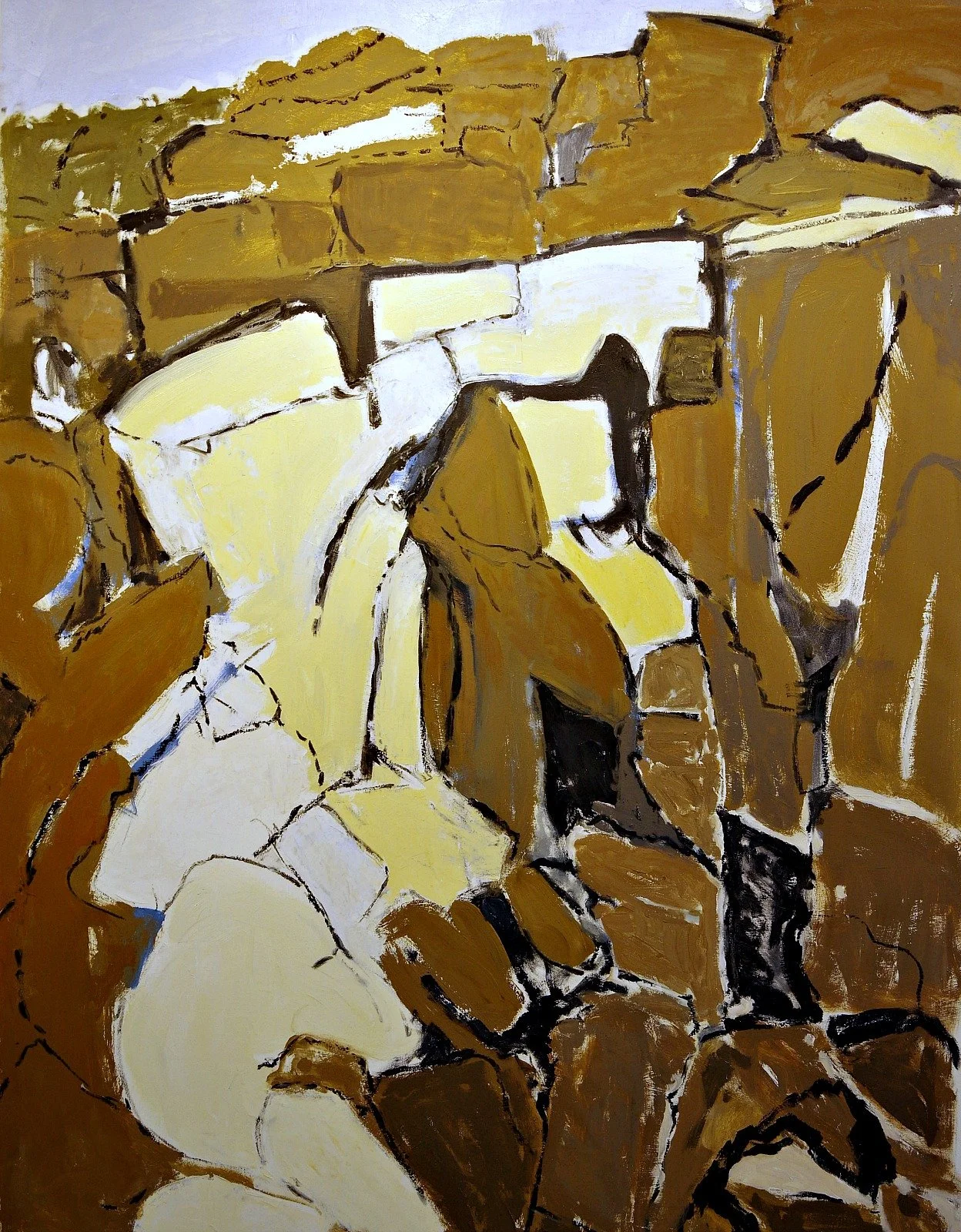
Iris Osterman, Rock Face, Oil on Canvas, 54" x 42", 2020
Iris: It’s been a very long time since I’ve worked non-objectively, and it was experimental. I really rely on the physical world to get me going. Sometimes this is less obvious than others. I can think of painters (de Kooning comes to mind) who relied on this as well at some point and came out completely abstract. I suppose the elements that attract me to the subject are the same as in pure abstraction. Sorry if I can’t be more specific.
Eileen: I don’t think you need to be any more specific. I honestly feel like I often see nonobjective compositions in nature all of the time, and your work very much represents that. Finally, if I could ask, to what extent do you invent, or deviate from what was perceived? I know that you work from sketches from life and photographs, but it really feels as if you extend well beyond the information that you gathered in your sketches and photos. Your work reads like you are constructing the forms, not just observing and reacting to nature. So for my last question, I am wondering if you could talk about the role of invention in your process. All of your work feels this way, but I have selected Neap Tide and Looking Out–perhaps you could think about these pieces when you discuss.
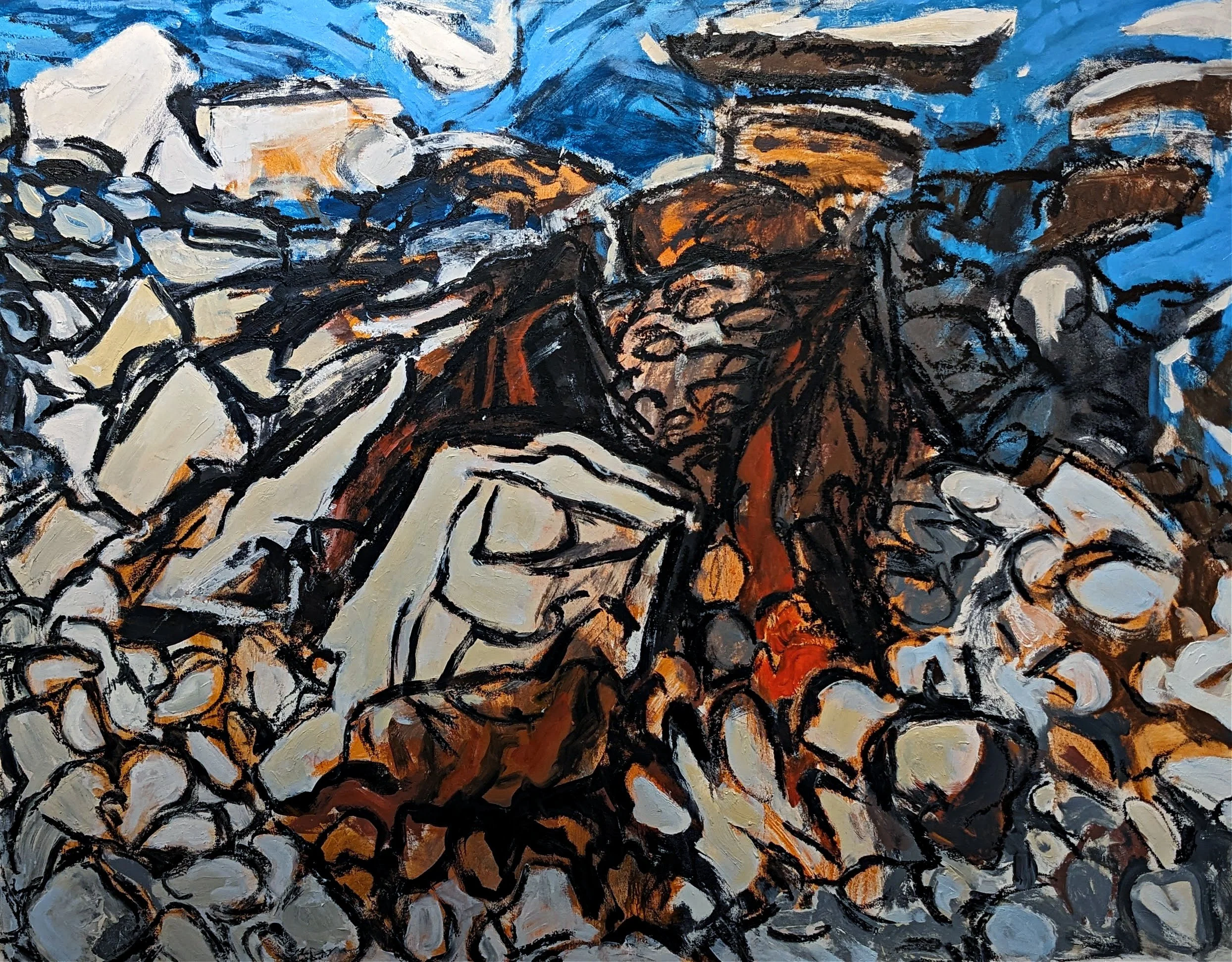
Iris Osterman, Neap Tide, Oil on Canvas, 32" x 42", 2024
Iris: After looking at the work all together I can see what you’re saying. Part of what reads as invention is from being caught up in the process and reflecting back an energy that comes from working. There is also some memory of place involved. But yes, I’m not tied to the shapes of nature though I think it’s important for me to feel a real place or memory of a place to make it substantial. That would be a starting point. I interpret what I see in this other language.
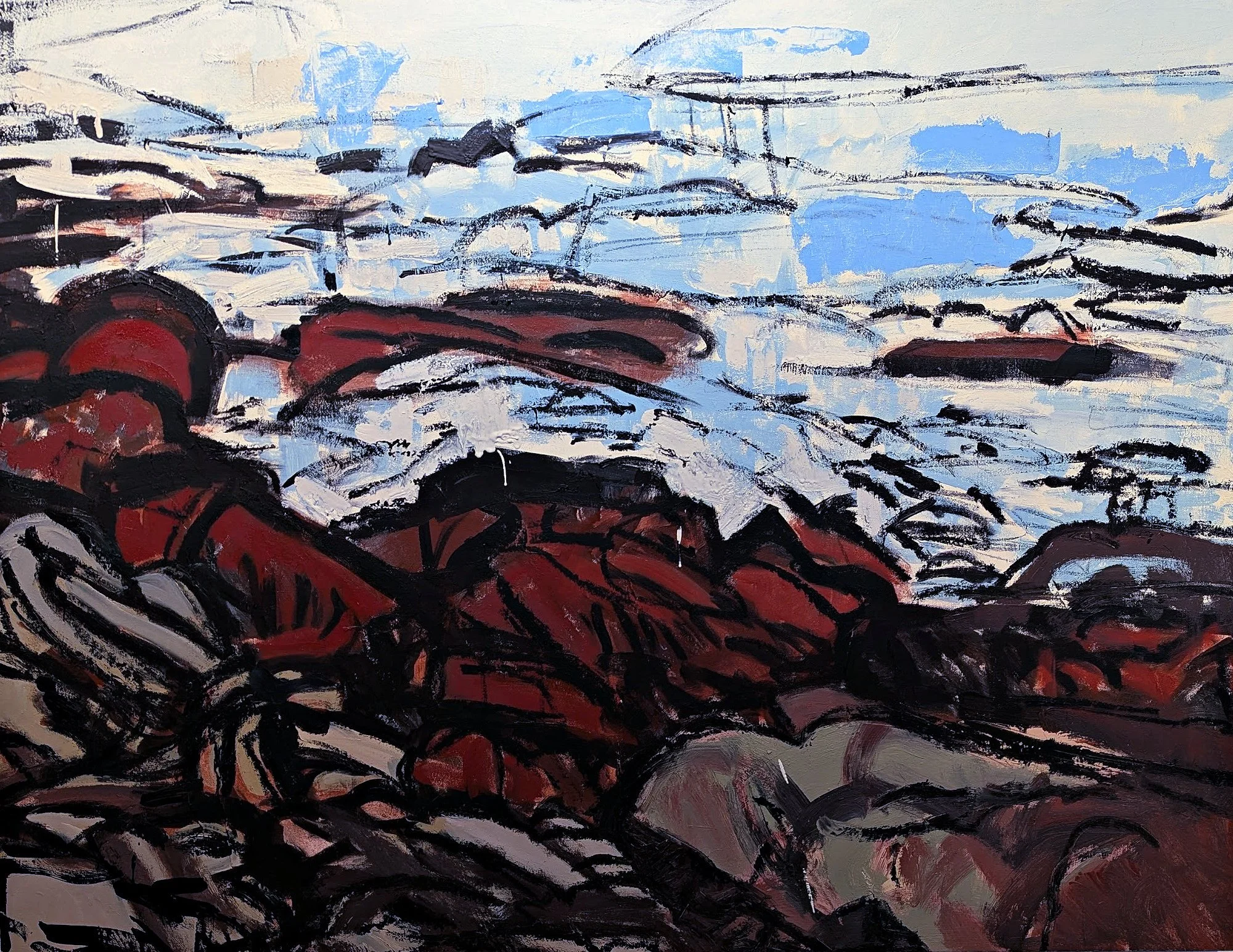
Iris Osterman, Looking Out, Oil on Canvas, 32" x 42", 2025
In Neap Tide I see a sort of dance between the rocks and the water. Thinking of it that way gives the forms a personality. And in the same sense I see Looking Out as almost an expression of longing. I see the heaviness of the bottom portion giving way to an airy space.
This is really part of the pleasure of working, that being we have the freedom to invent. There is no wrong answer.
Come view Iris Osterman: Selected Work at Bowery Gallery from Oct. 6 through October 31, 2026. There is an opening reception on Saturday, Oct. 10, from 3 to 6pm.