Hearne Pardee: Landscaping
Eileen: As this show marks 50 years of painting, I am wondering if we could start by having you share a bit about the show.
Hearne: Setting up my current show, as in my shows in the past, I was troubled by what might seem a disconnect between the abstract, improvisatory paintings with collage and the ones painted directly from observation. I’ve often wished I could abandon one without abandoning something of the other.
When I started working more abstractly at the New York Studio School in the early 70s, Philip Guston, who encouraged my large abstractions, told me I’d never go back to working outdoors from the landscape. He said, “Don’t worry - there are people who will understand what you’re doing,” but I didn’t take his advice. I was strongly identifying with Cezanne, and I didn’t trust that his new work (the Ku Klux Klan paintings) sufficiently respected that legacy. So I cultivated a dual identity, using collage as a basis for abstraction.
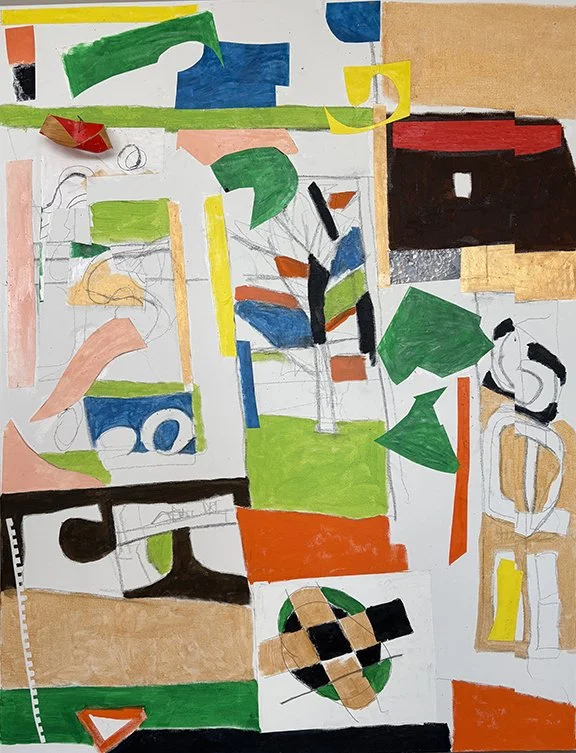
Hearne Pardee, Orr Road Garden, Oil and Acrylic Collage on Canvas, 40”x30”, 2026
For me, a lot has depended on the encouragement of significant teachers like Guston. As a freshman at Yale, my French Professor, Henri Peyre, helped publish a paper I wrote about Proust’s use of color; that inspired me to take Color 14B, the Albers color course, taught by Sewell Sillman, a close associate of Albers, who taught me to see paintings as color compositions rather than just pictures, and inspired my involvement with Cezanne, Matisse, Klee and Miro. And at the Studio School, George McNeil’s drawing class introduced collage as an extension of Hans Hofmann’s spatial abstraction.
Landscaping reflects all these influences. Garage is most obstinate in its static, perceptual focus, as though returning the gaze of the dark windows. It recalls me to Proust, to the “patch of yellow wall” in Vermeer’s View of Delft, which his fictional writer Bergotte contemplates as he dies. In defense of outdoor painting I like to recall Matisse’s statement that while "the Impressionists painted a moment in nature, Cezanne painted a moment in the life of the artist”. I’ve looked a great deal at Matisse while doing the works in my show, especially his Garden at Issy, which combines objects on his wife’s dressing table with the backyard pool of his “red studio" at Issy. His improvisations have inspired my own, especially in the collage of Orr Road Garden and in the painting of Lawn.
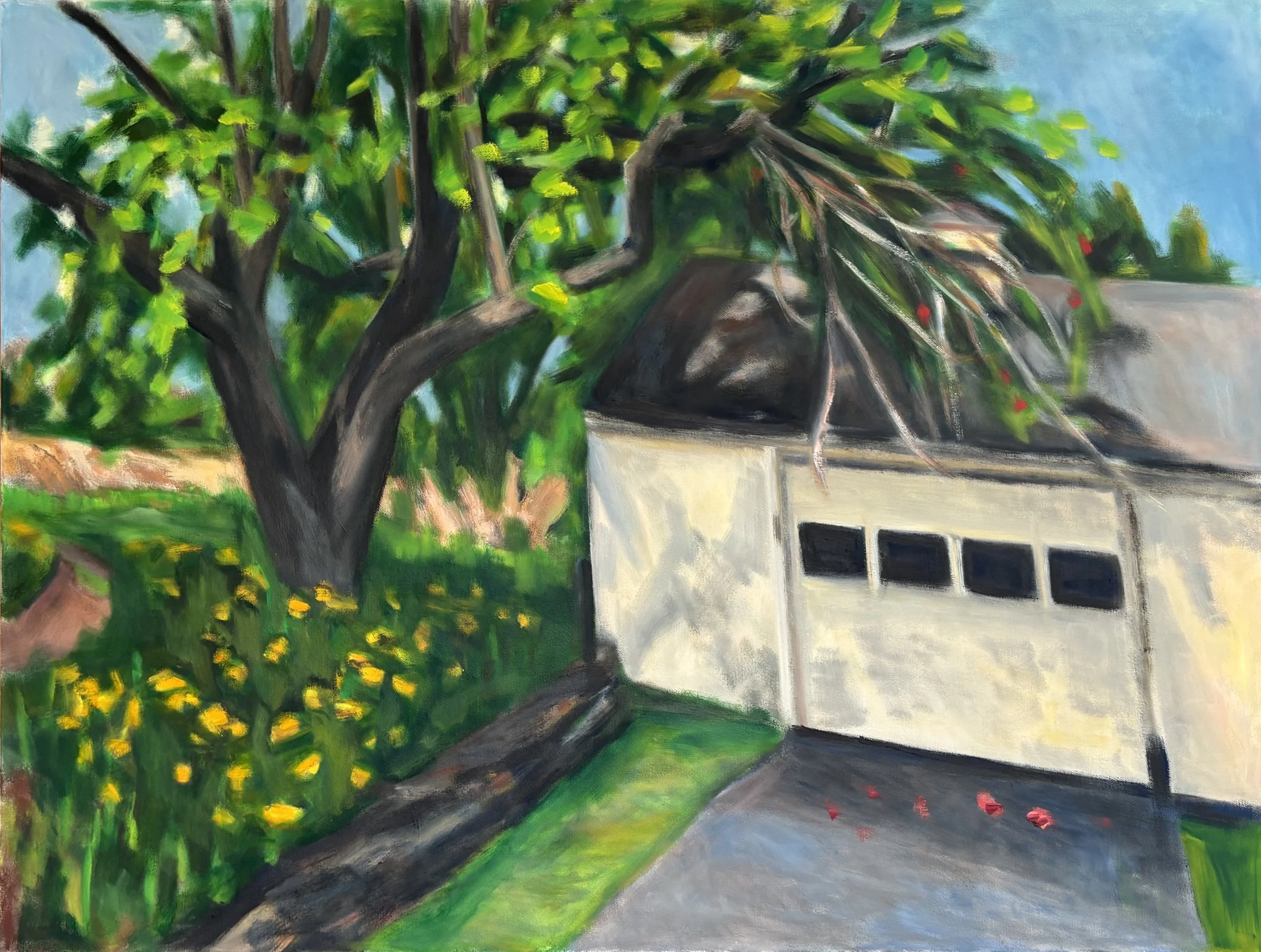
Hearne Pardee, Garage, Oil on Canvas, 30”x40”, 2026
Eileen: Wow. I have to say that your concern about the disconnect between your abstract collages and your perceptual work and the dual identity that you feel as an artist is something that I also share with my own work. What's actually particularly interesting is that as I was examining your work this morning, I was thinking about my next show and how I might choose to present that in a more intentional way--to not choose one body of work over the other, but to include the duality.
To that end, I was thinking that your show feels like you are opening the front door of your mind and studio and welcoming everybody in. To me, when I look at the landscapes, then go and look at the abstract collages, and then back at the landscapes, I understand them more. Your history with Hofmann very clearly shines through in your work. In this show, we can see how you deconstruct space, from straight-ahead paintings of the landscape, to photographs with collaged color blocks, to juxtaposed landscapes in quadrants, to the collages that mimic the scraps tacked onto his studio wall, to the paintings of studio scenes–paintings of paintings, combined with the studio wall and still life objects. The variations on the theme feel endless. You really did open the doors wide open and have invited us in to explore this recursive act of making art.
Hearne: You’re right about my interest in what I call “infolding”, connecting different spaces as I move and also linking to different times and media. I think you’re alluding to Rocks and Water, which really stretches things by linking the studio table to Asian landscape painting, along with paintings of my own collages and photographs, along with, of course, the other “real” objects on the table. I like the idea of including landscape virtually—I like the idea that just by awareness of the vertical pull of gravity we generate a projection of our position in the world, including the things we know are around and behind us. This idea has enabled me to put in abstract marks or pieces of color that refer to things we know are there but that we aren’t currently attending to.
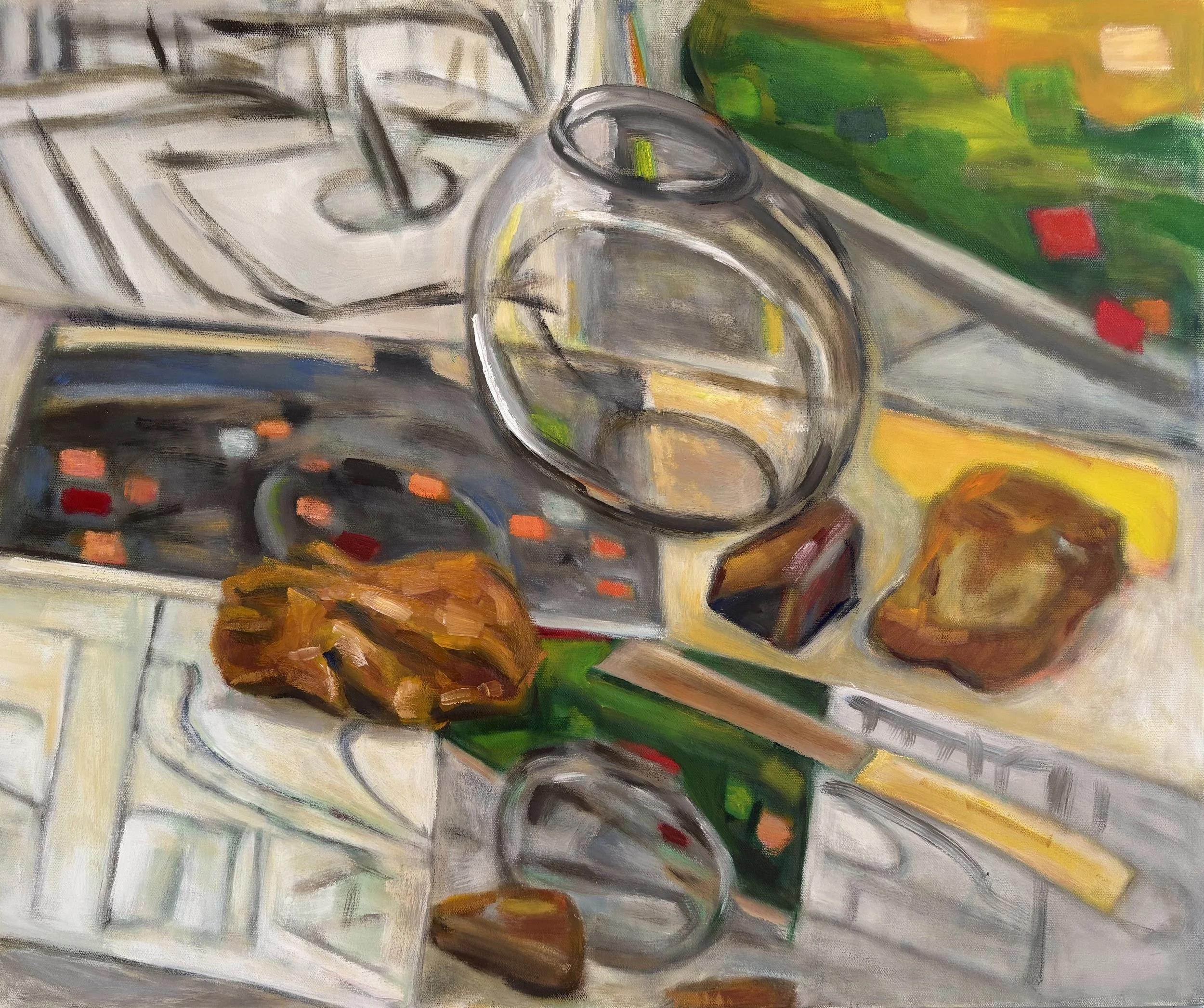
Hearne Pardee, Rocks and Water, Oil on Canvas, 24" x 30", 2026
Eileen: I would love to hear you talk about the role of photography versus painting in your work. Two pieces that come to mind are Mace Ranch and Primary Landscape. Upon first glance, there are obvious similarities: they are both collage pieces that are set up in a Cartesian plane format, with four scenes occupying each quadrant. However, the use of collage seems distinctly different in these two pieces–in Mace Ranch, it seems to be used as a unifying element on the picture plane, pushing the four juxtaposed sketched scenes towards pure abstraction that allude to spaces that go in and out. In Primary Landscape, the collaged photographs seem to behave in a more experimental way–like four distinct spaces that function together to show color placed in space. Can you say more about these works?
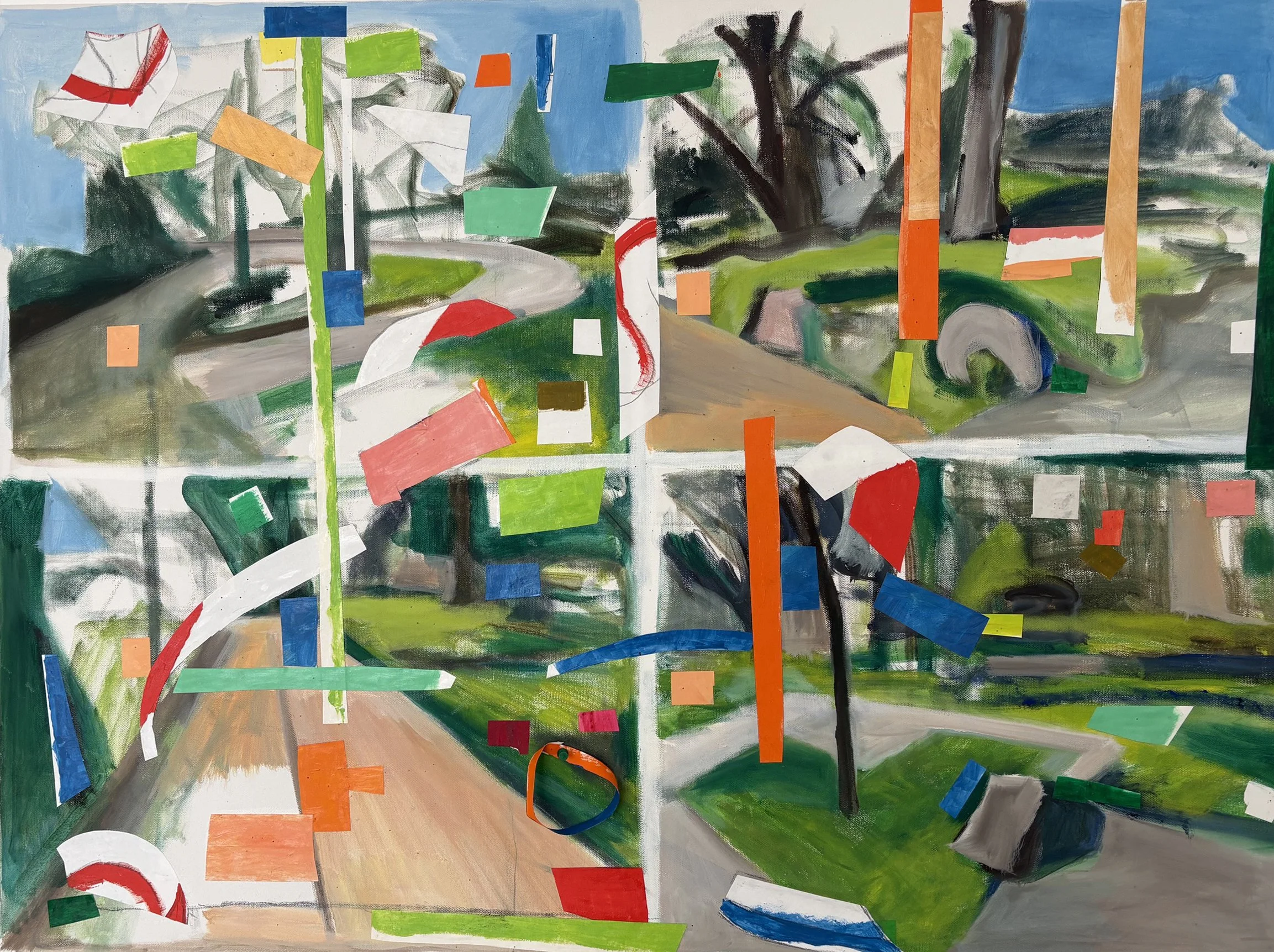
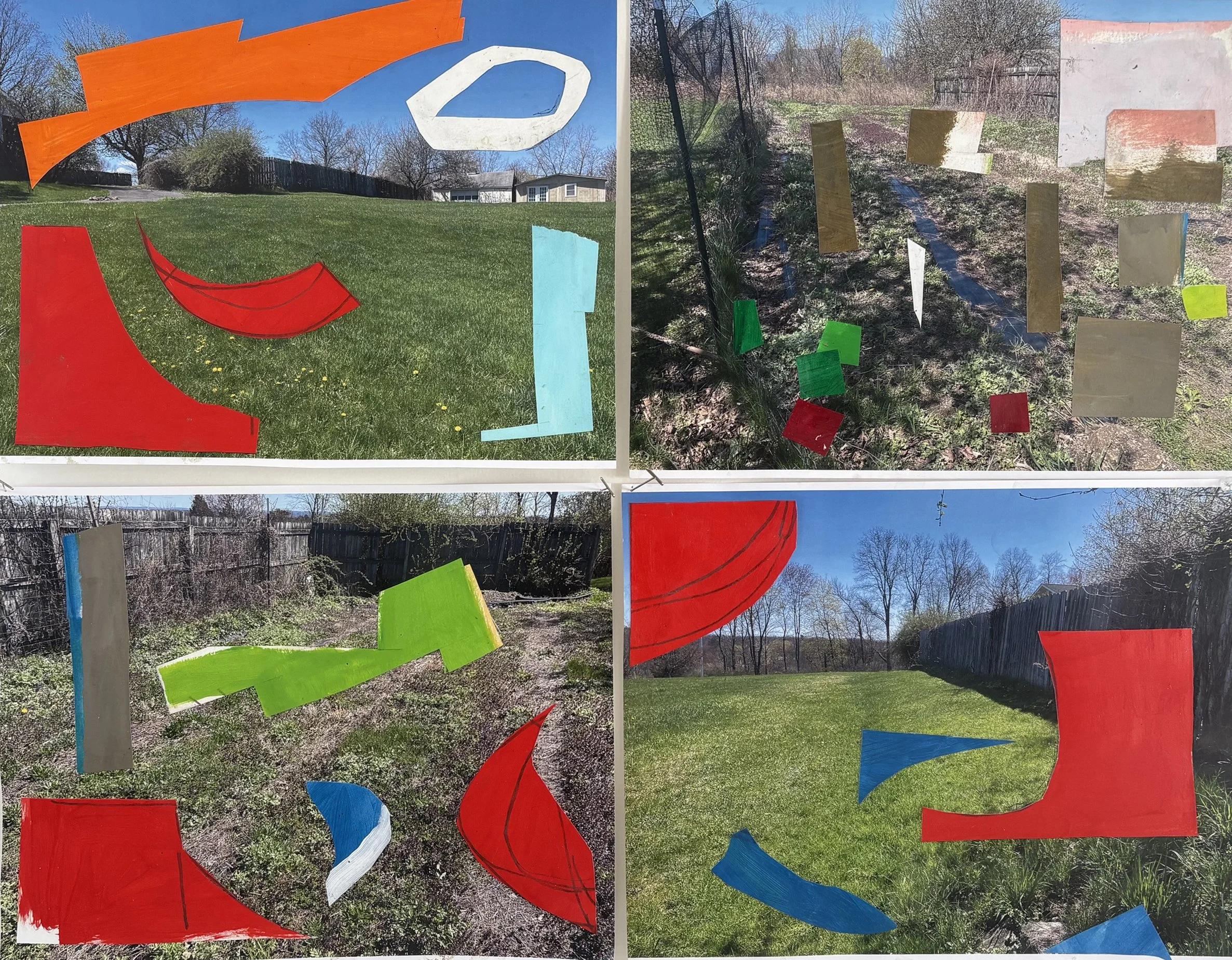
Hearne: That’s a good observation. I like the idea of making painterly adjustments to photographs, since photography once threatened to replace painting. Photography today conveniently offers a readymade image of a specific place and time, along with the personal dimension of our relationship to our phones. Photographic prints, of course, also provide a field for improvisation. Those improvisations can go in very different directions, as your question suggests, The goal in both of those fourpart paintings - four views of the same place combined in an overall configuration - was to use personally inflected colors to create an overall light, to enhance the spatial integration of the four views - very influenced by Cezanne. Mace Ranch depicts a suburban park laid out on a grid in Davis, California. Primary Landscape (or Hudson Landscape as it’s also called), which depicts my local backyard, arose, on the other hand, from a random grouping of cut-out paper scraps that suggested a more gestural unity, more like sculptures in the landscape, such as Arlene Schechet’s grouping at Storm King. It’s a more conventional collage strategy to take inspiration from whatever is at hand. My basic instinct in both cases is to push for stability, but maybe the Hudson landscape will encourage a looser approach!
Eileen: It’s really interesting to me to look at your landscapes after having spent time with your mixed media work. When I initially looked at Lawn, I considered it to be a straight-ahead plein aire painting, but after having examined your collages, I see much more connection to the abstraction. The hard shapes of the shadows and the rectangular markmaking in Lawn, for instance, seem to be informed by these same collages that we just discussed, but also even more abstract pieces, such as Peripheral Vision. Do you think about your collages when you paint from life, or work more representationally?
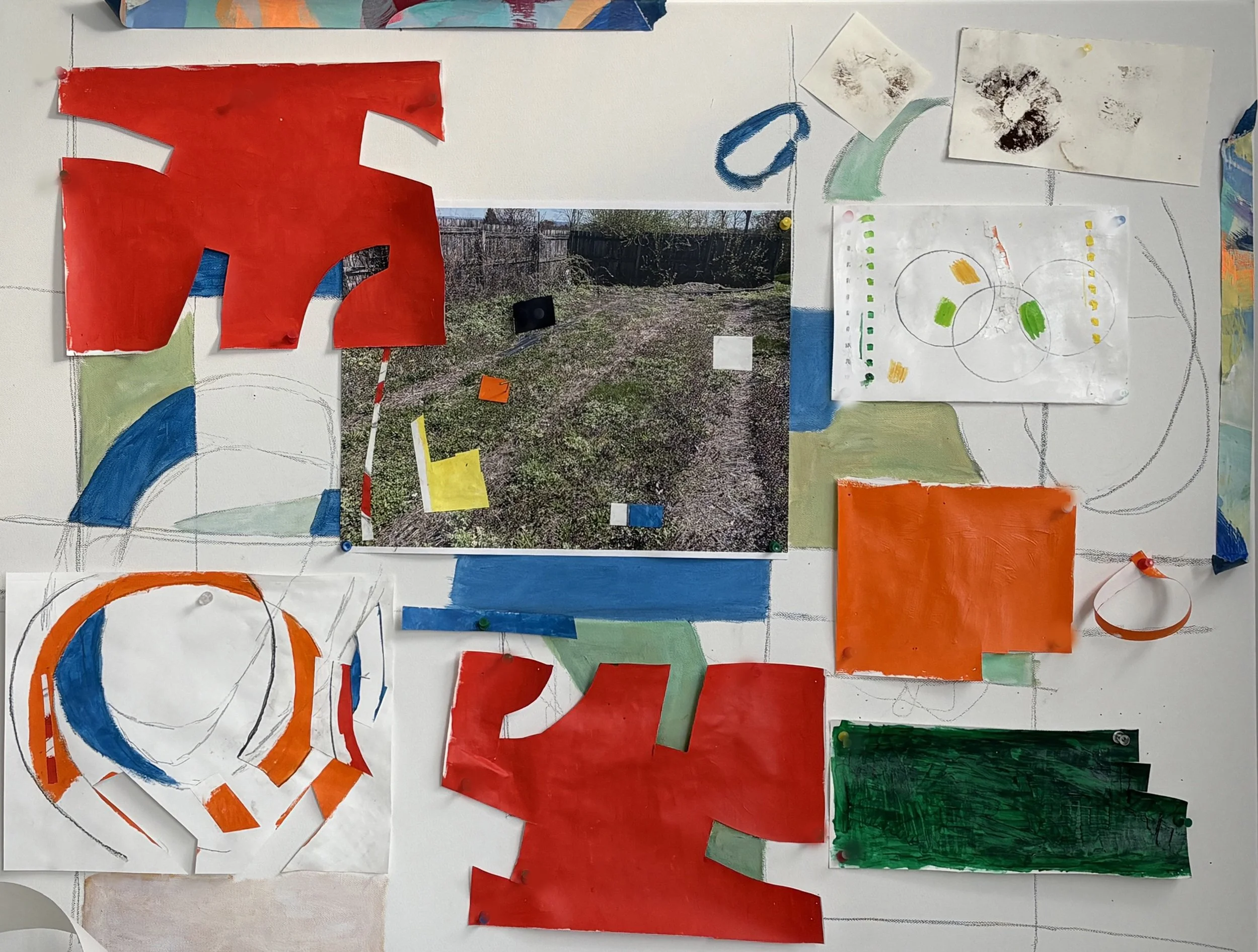
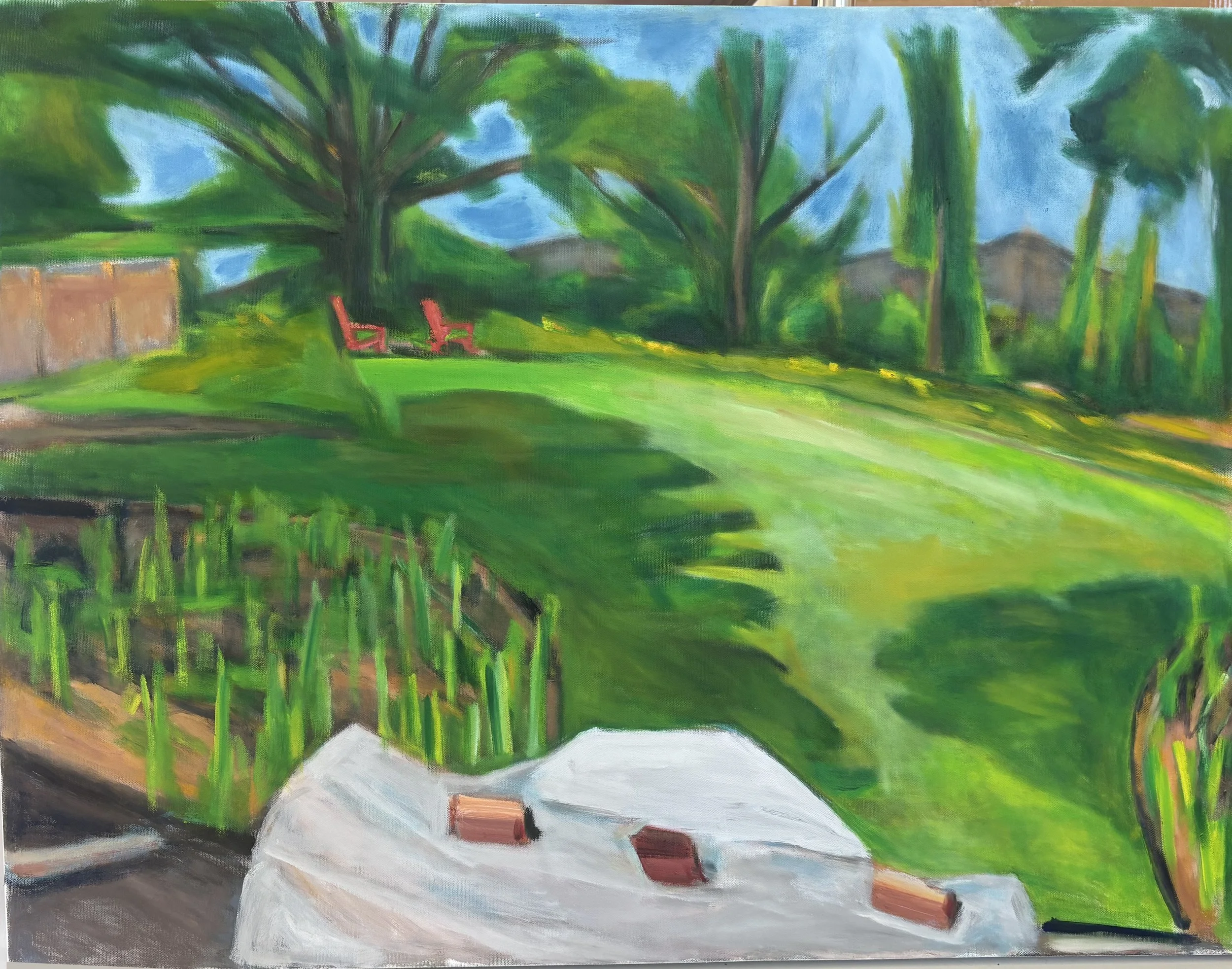
Hearne: I was actually very pleased that Lawn, for me, got away from the conventional outdoor painting—there’s more spatial improvisation inspired by Matisse, especially in the compression of marginal spaces around the central field, so your connection to Peripheral Vision is very apt. I‘ve always been interested in peripheral vision, in things perceived subliminally. Philosopher Alva Noe has written interesting things about how little we actually “see”. I don’t think directly about the collages when I paint, but I certainly have come to see every patch of color as a constructive element in my composition, even if it represents nothing in particular.
Eileen: Lastly, I would love to know about the mobius strips in your work. Can you divulge a little about that?
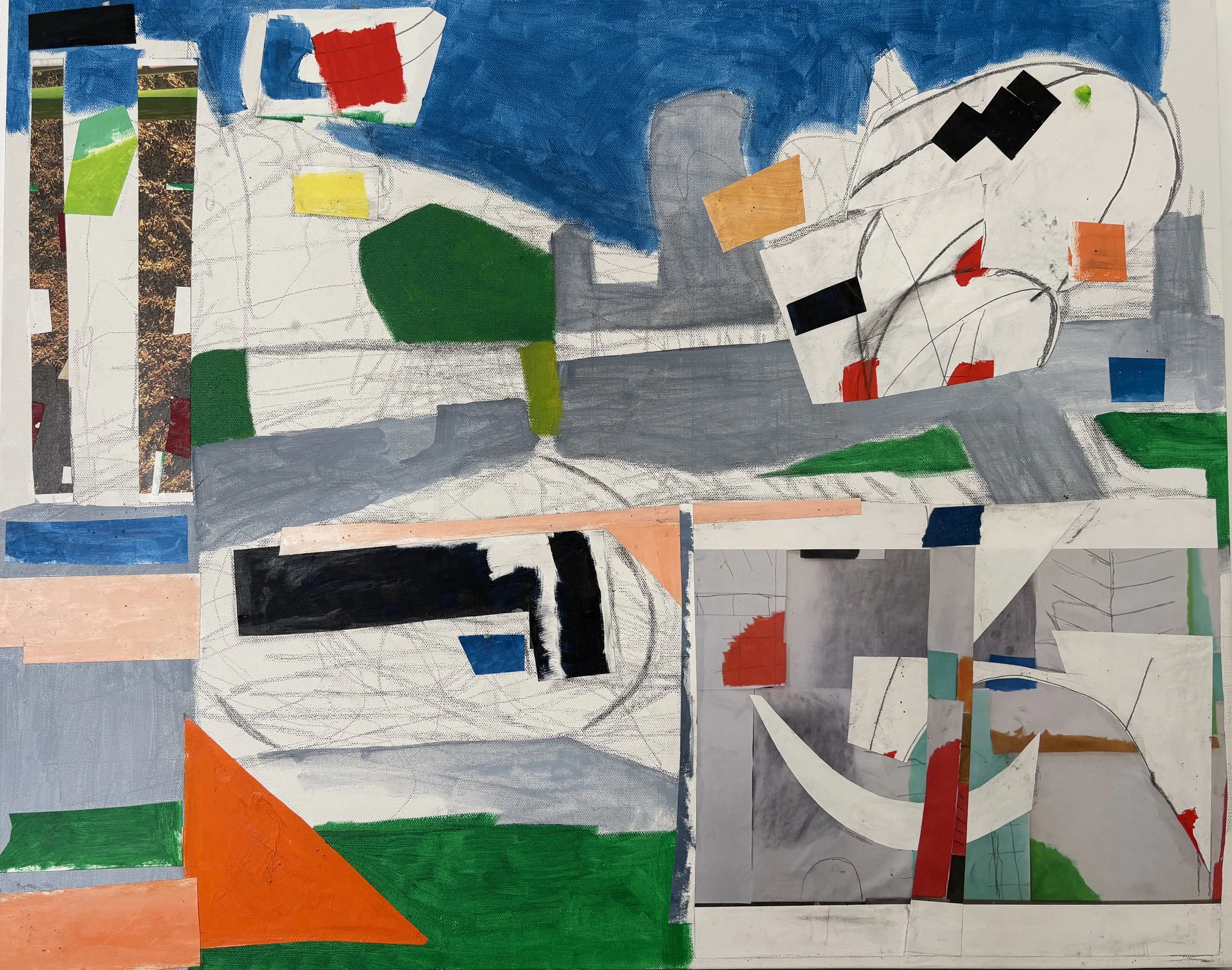
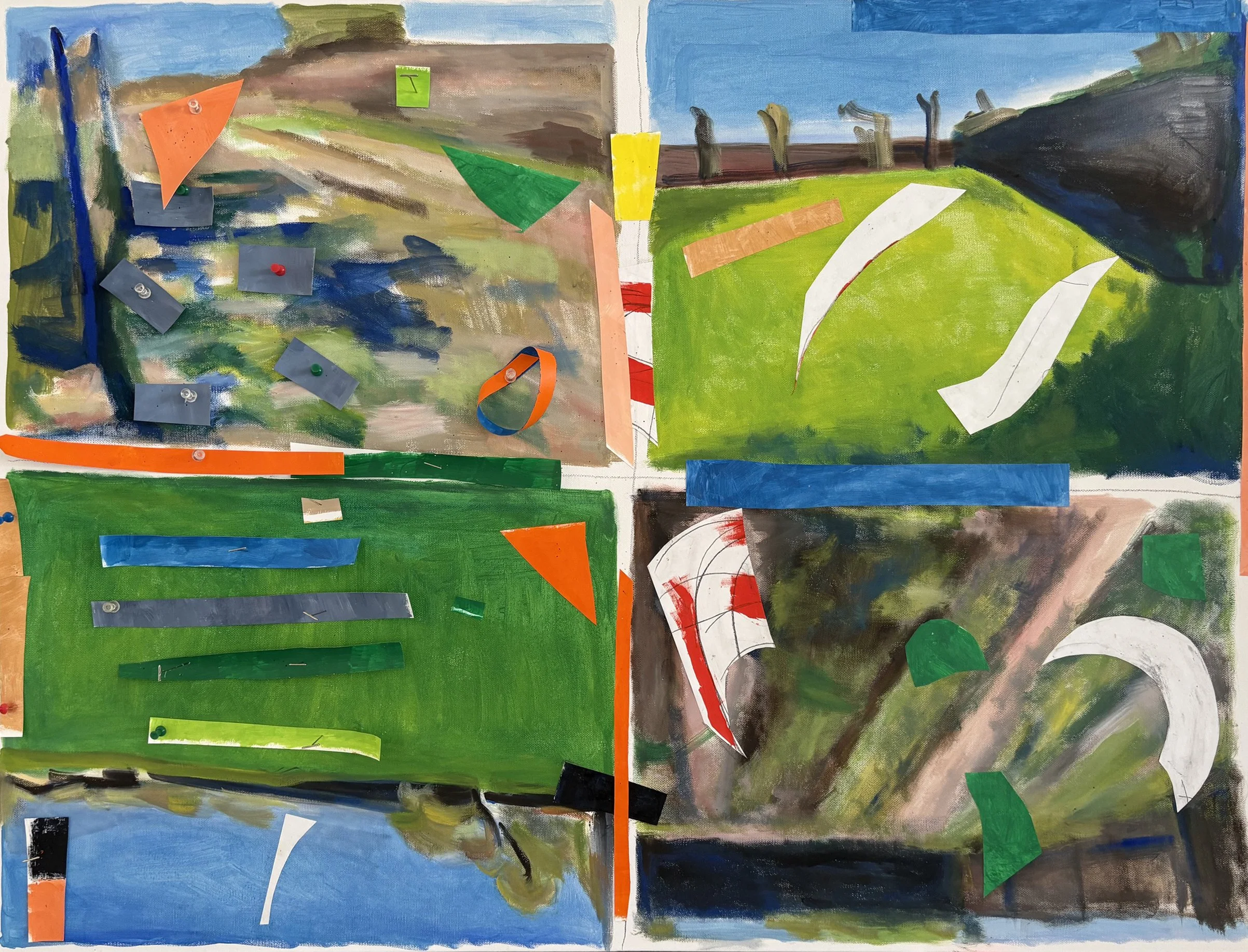
Hearne: Those actually come out of my interest in Mexican artist Gabriel Orozco, who began using the strips as a way to “jump” from two dimensions into three—like the move of the Knight in chess, who combines moves along the grid with diagonal ones; he can also jump over other pieces. This liberation from the Cartesian grid, is so dominant in traditional perspective and in much modern art, links to my interest in combining different views of the same scene. Orozco talks about the “gravity point”, our connection to the ground, as opposed to the “eye-point” of perspective, which fixes us in a set position visually. I like the bodily sense of location. I’ve also been influenced by the sculptures of Jilaine Jones, which are often based on walking in landscapes. I’d like to push my collages more in the direction of bas-relief, as I do with the mobius strips.
Hearne Pardee’s incredible show, Landscaping, is on view at Bowery Gallery from September 8 through October 3, 2026, with a reception on September 10, from 5-8pm.