Glen Cebulash: Fabrications
Eileen: Glen, thank you so much for participating in this interview about your upcoming show. I am fascinated by your work. As I am a newer member, each blog post has been a nice opportunity for me to get to know each member and their work. To prepare for this interview, I looked at the images of the work for this show, but I also looked at your website. As someone who works from perception, while also nurturing an evolving body of more structural abstract work, I was really excited to discover all of your landscapes, still life, and self portraits. None of the images have dates on them, and I don’t know you and I don’t know anything about the trajectory of your work. So, I am wondering if you could talk a bit about your background. I would also love to hear about how you came to arrive at your abstract inventions and how your perceptual work informs that work.
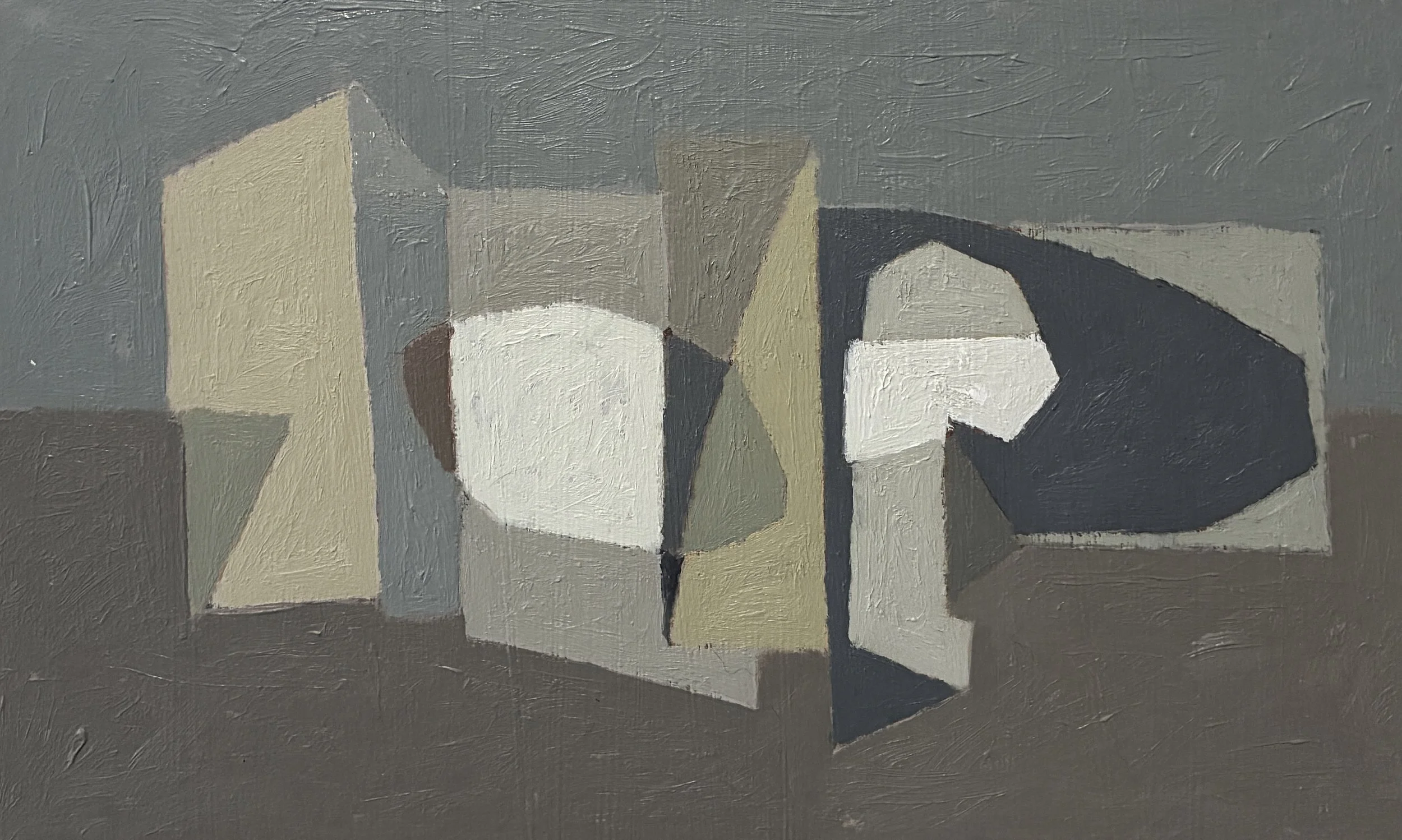
Glen Cebulash, Untitled 4, oil on paper, 6.75”x11”, 2025
Glen: I grew up in northern New Jersey and began taking advantage of my proximity to the museums sometime around 9th grade - a great and largely unstructured early education. After graduation I went to Boston University to study painting. It was a figurative program then, mired in German modernism and American Social Realism. The two teachers who had the greatest influence on me were Reed Kay and James Weeks. I went to American University for my MFA and had the great good fortune to study with a number of wonderful painters, including Deborah Kahn and Stanley Lewis.
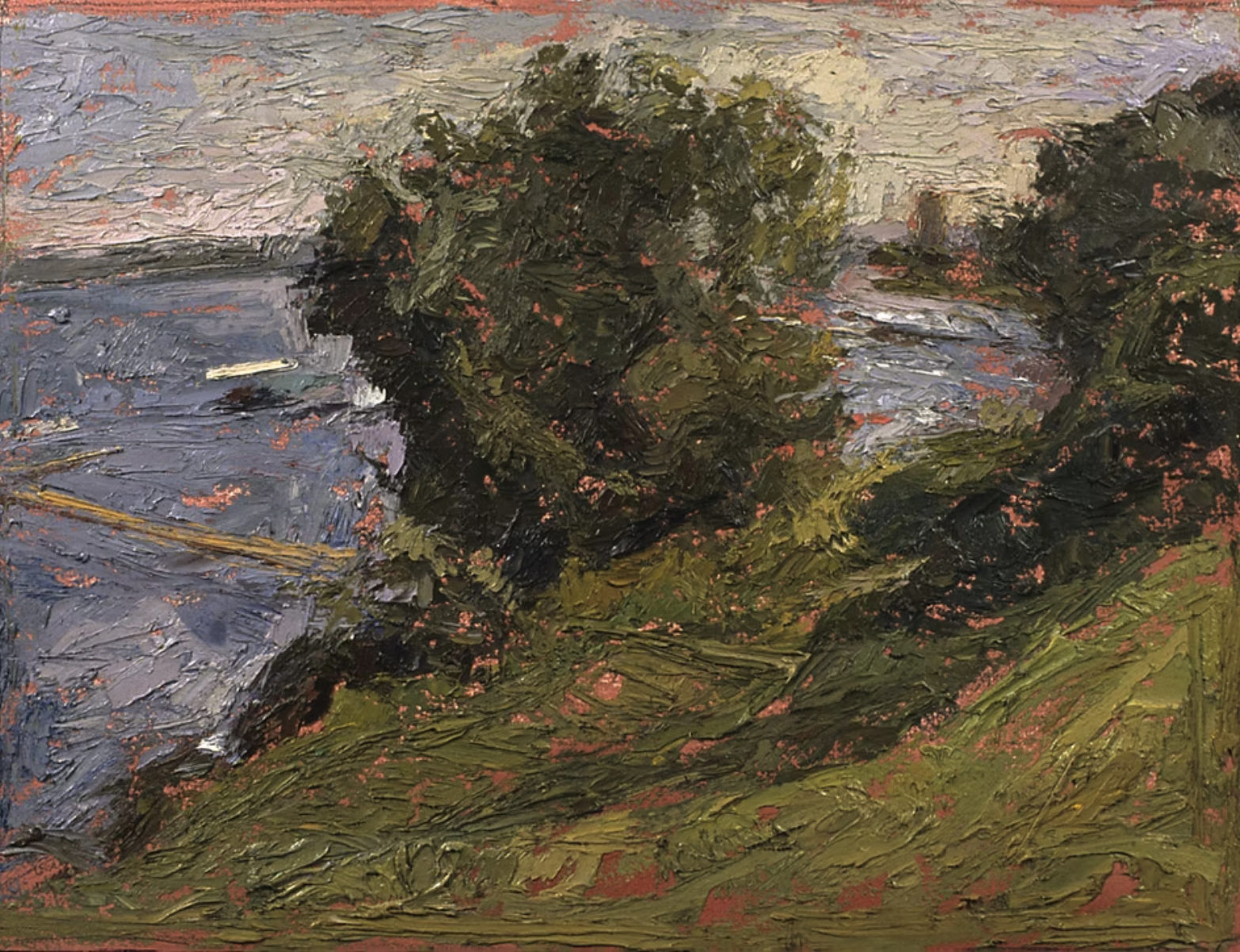
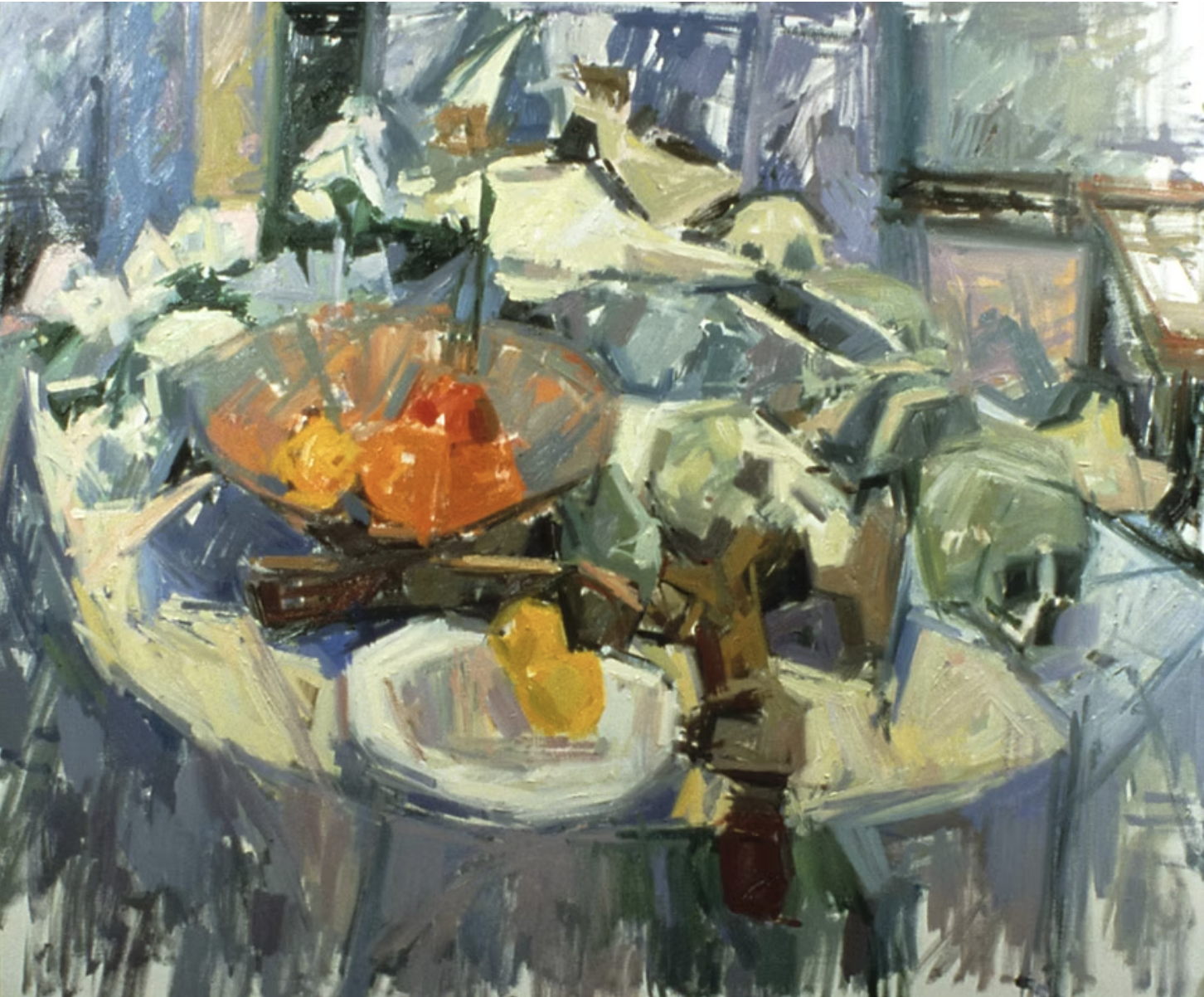
I was always interested in abstract painting, but my education and early influences were by and large figurative, so it felt quite natural to work from life and to see myself in those terms. My transition to working abstractly developed gradually, but came from two impulses: a desire to invent and a desire to work on a painting for a sustained period of time. Of course both of those things can be done figuratively (and are, all the time), but abstraction was where my wandering just happened to take me. The decision was far less ideological than temperamental.
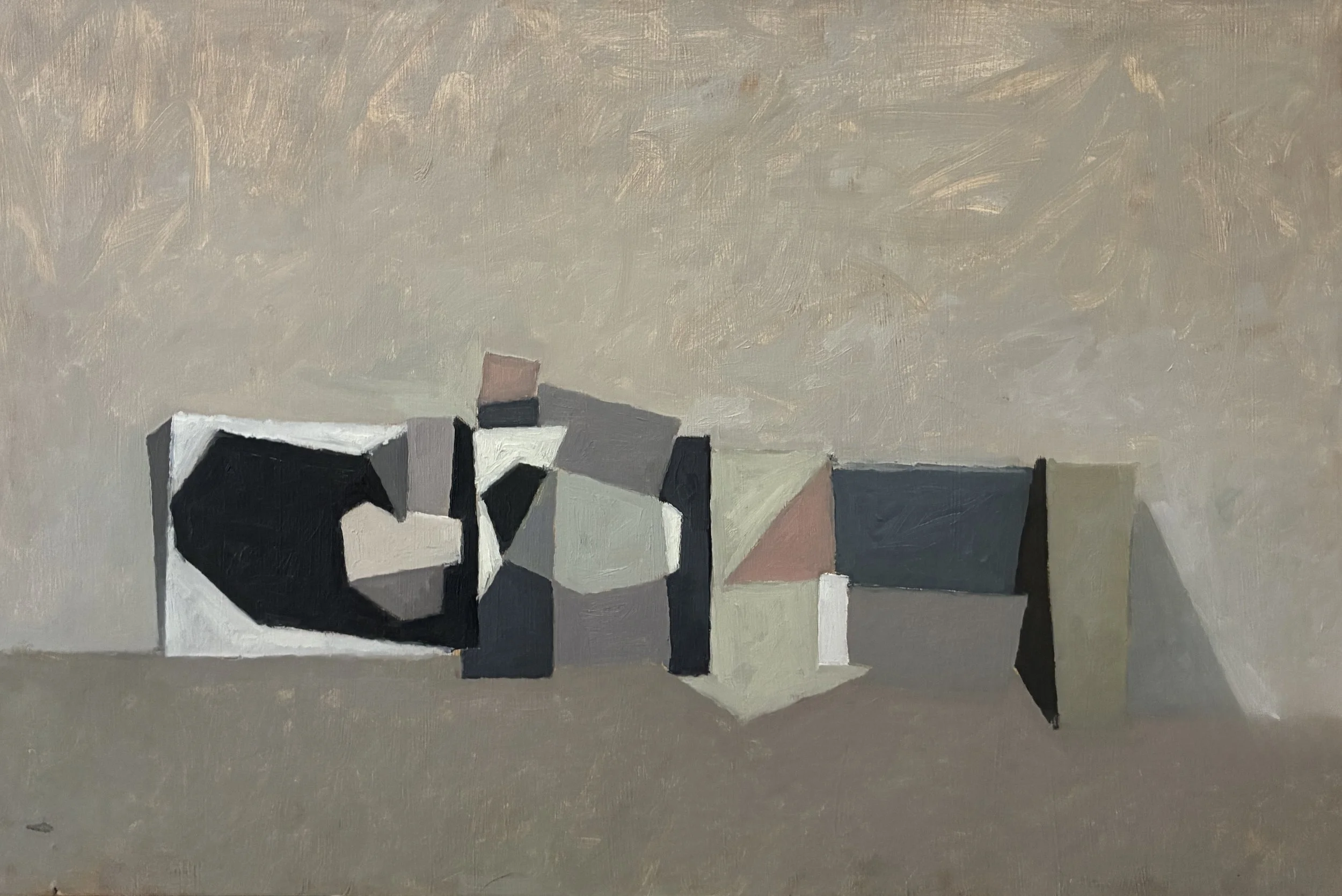
Glen Cebulash, Untitled 13, oil on paper, 12.5”x19”, 2025
The vast majority of painting that I look at is representational and, but perhaps that’s just because the vast majority of painting is representational. It’s hard to say with any degree of precision how that, or my work from observation, informs the abstraction, but it surely must. Something, I suppose, to do with clarity, color weight, mass and scale, but I realize that sounds pretty dry. I once heard Leland Bell say that all painting comes from nature. The writer John Berger wrote something similar. That seems about right.
Eileen: That sounds right to me, too. Do you still paint from life, or has the abstract work fully taken over? Looking at your landscapes, in particular, I definitely see a relationship to your abstract work. Conversely, your abstract work alludes to Morandi’s still lifes. So it makes me wonder if you regularly go back and forth between these two painting practices, or if you have fully committed to invention at this point in your career.
Glen: No, I don’t really paint from life anymore. I still draw, mostly self-portraits and landscapes, but not in a focused or concerted way. That’s not to say that I wouldn’t if it seemed like the right thing to do, but rather that it just doesn’t capture my imagination the way the abstraction does. Your observation about these relationships is one that interests me. To go back to the Bell quote for a minute, all painting does come from nature, from something having been seen, but abstraction also comes out of painting itself; its forms, its tropes and motifs, its…..ur-structures. For me, Mondrian seems to be the great exception. I can see how his painting emerges, but when it arrives it’s just kind of uncanny. It doesn’t look like anything else and that’s pretty intriguing. If there are landscapes and still lifes in my paintings it comes as no surprise to me. They’re much of what fills my head.
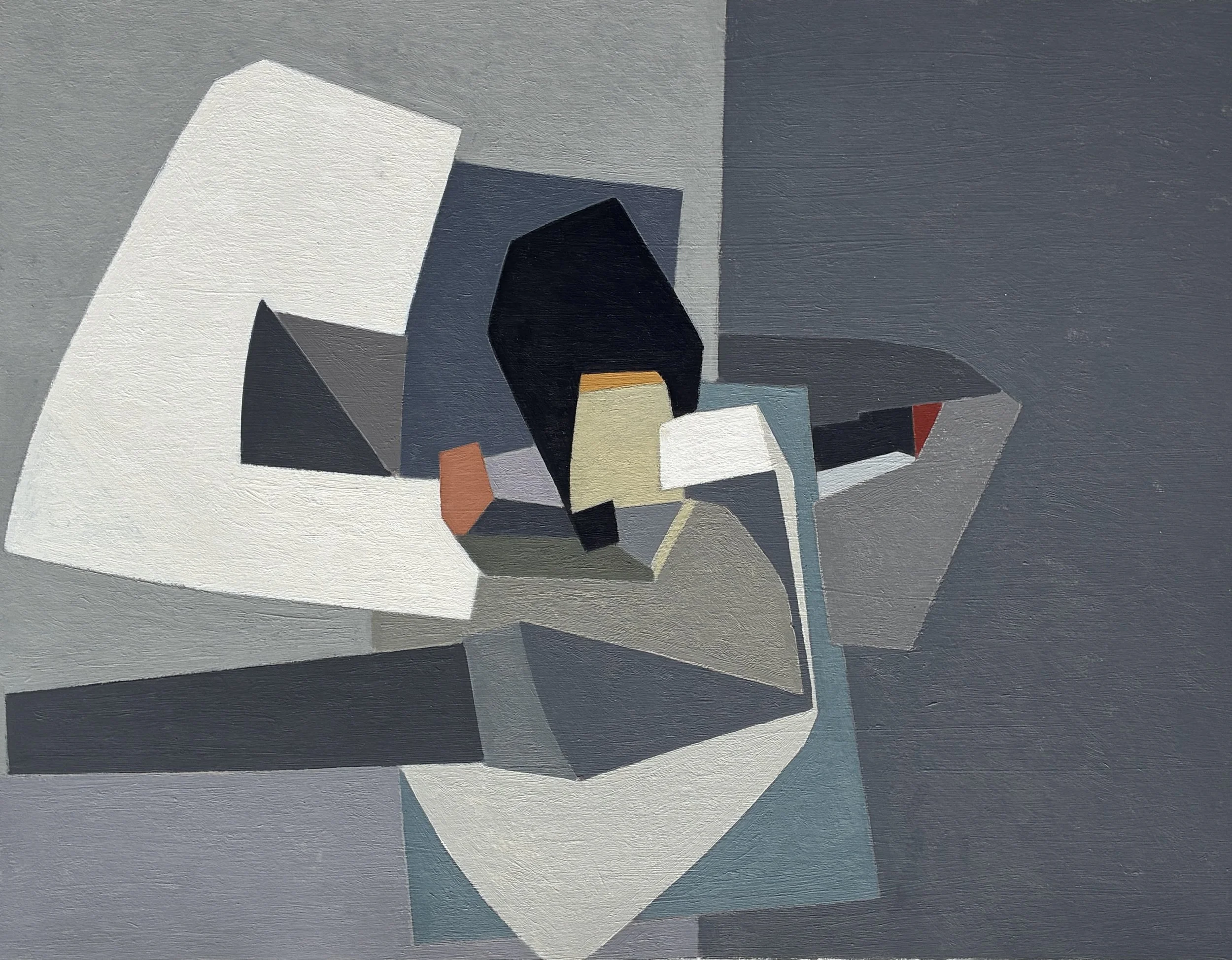
Glen Cebulash, Sigaro, oil on paper, 22.75” x 29.5”, 2025
Eileen: And to elaborate even further on your Bell quote–I agree that all painting does come from nature, but nature is not just seen, it is action, and it is what is experienced. And as painting may have reference to observable nature, it also references those aspects of nature that are identifiable as human experience–for instance, the compulsion to paint, the impulse to create structures, and the experience of moving paint around on a palette and a canvas. Perhaps this may be where we venture off into the realm of nonobjective abstraction, which is where your work has taken you. It’s interesting to think about, though maybe more profound to simply experience.
Glen: This is all fascinating stuff and I will need to give your elaboration on the role of nature in painting some more thought. For my part, I was referring primarily to something having been seen. That could be a color, or a form, or a pattern, or movement, etc. When I’m making a painting, I suppose it’s fair enough to say that I feel as if I’m making something, like folding a piece of paper, fitting things together or fabricating materials into some kind of unit. There is a three dimensional effect, but it’s illusory. I think of them as primarily visual and not something that could actually be constructed in the real world.
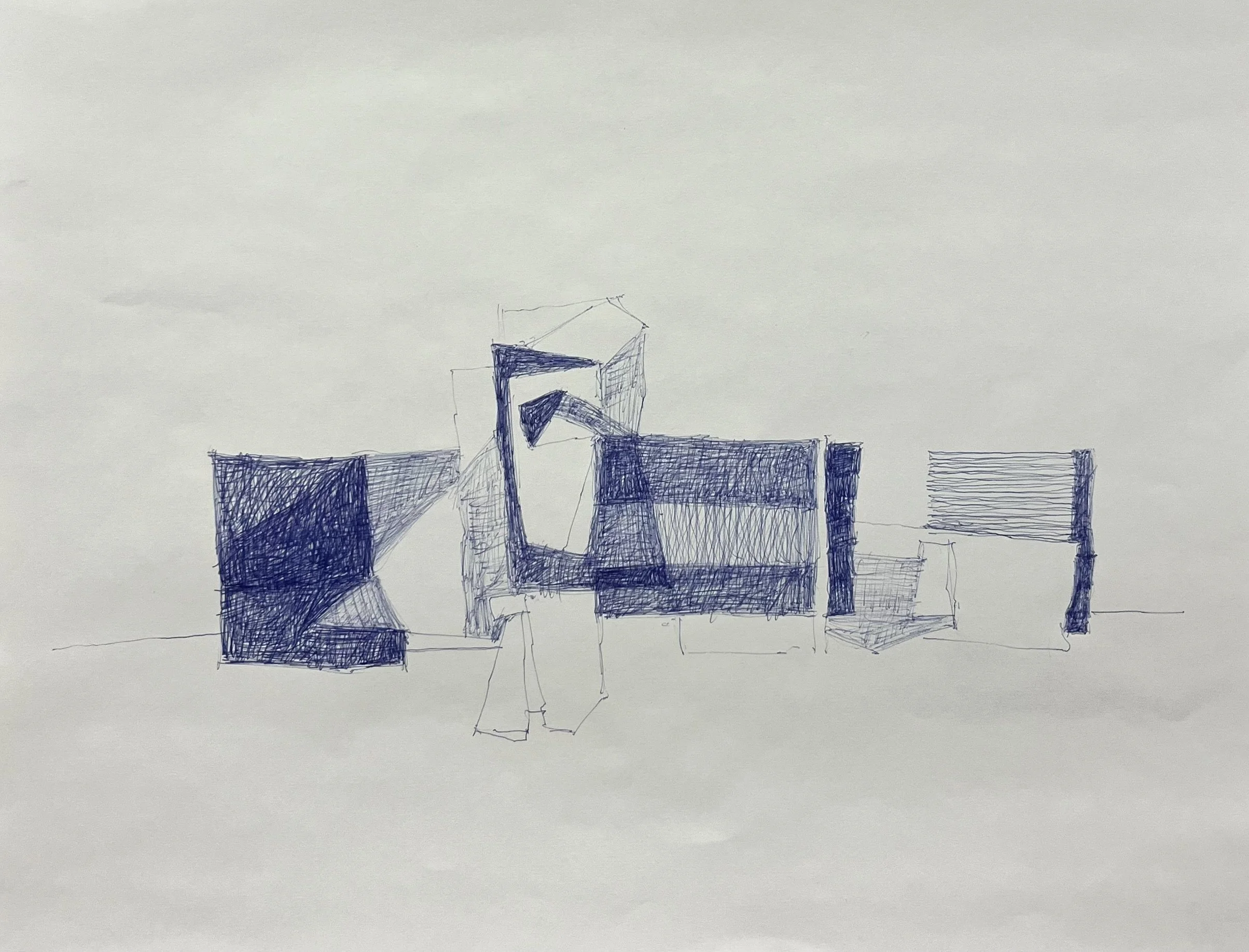
Glen Cebulash, Untitled 25, Ball Point Pen, 11" x 15", 2025
Eileen: I’m particularly intrigued by your ballpoint pen drawings. They are small, portable, and done with simple materials. Whereas I can imagine that your paintings are done over many sessions in your studio, I’m interested in the story behind those smaller drawings. I’ll say also that I relate to this work a lot because I have my series of small drawings like those that are done in marker on yupo, which are materials that are small enough where I can take them almost anywhere and keep working on them in almost any situation that has me just sitting there. Are these drawings from the studio or are they more of a perpetual activity?
Glen: I wish it were an interesting story! By and large, they come from paintings that I’ve made, or other drawings, and they generate more drawings and more paintings, which in turn generate more ballpoint pen drawings, and on and on. It’s all very circular. I do lots of them, and generally very quickly. Many get tossed aside. I wouldn’t call them gesture drawings necessarily, but I think they’re made in a similarly un-self-conscious spirit.
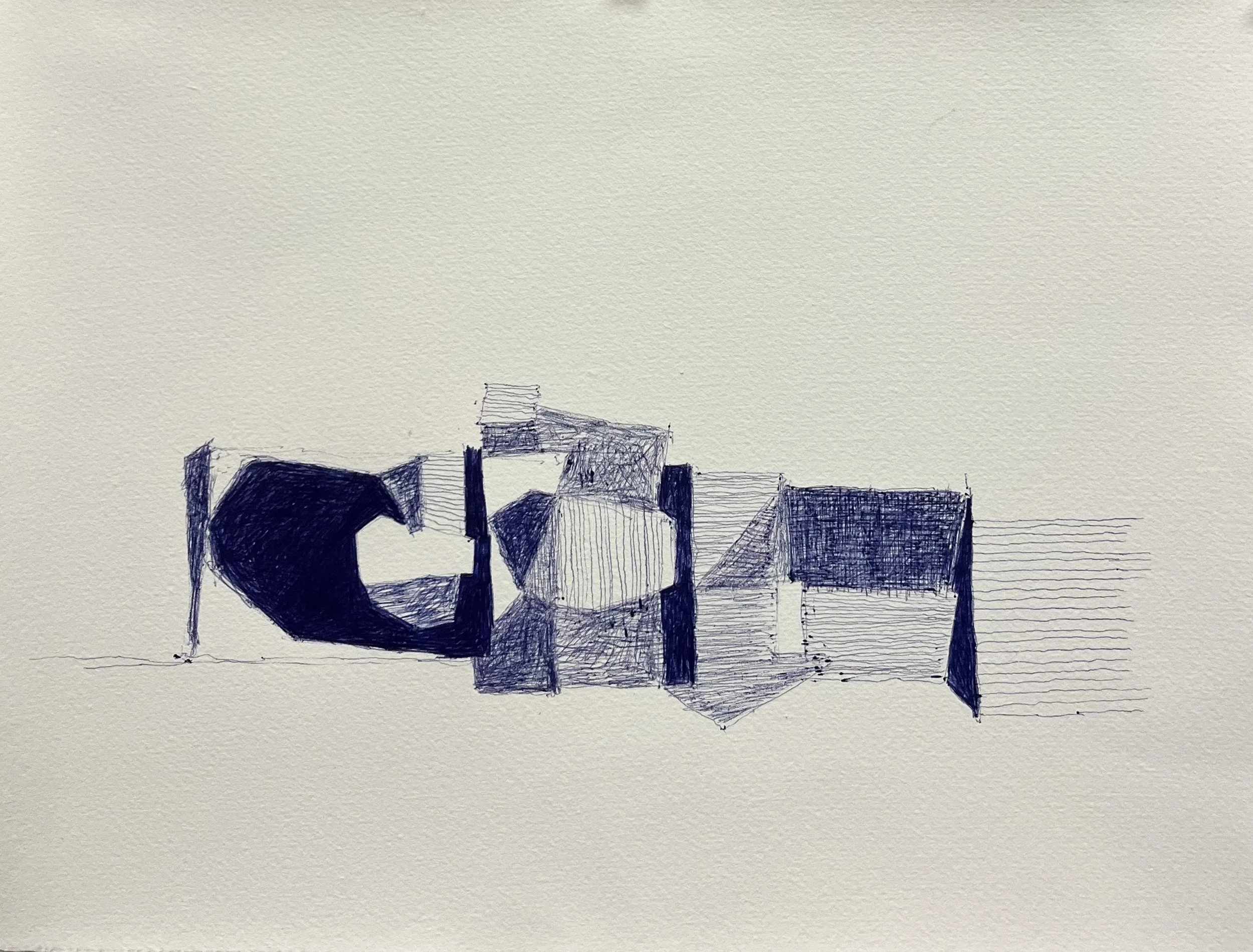
Glen Cebulash, Untitled 17, Ball Point Pen, 12.5" x 16", 2025
Eileen: I don’t think that is boring at all. I love learning about different artists’ processes, particularly those who spend the majority of their time in invention. I know I mentioned Morandi earlier, but your drawings really remind me of his drawings and etchings, as well. Though his drawings are almost impossibly bare bones, there is a vulnerability in the mark that you both seem to share. This mark making translates into some of your paintings, as well. In your paintings, while the shapes are clearly defined across the board, some are more “clean”, if that makes sense.
Glen: Yes, certainly. Some of the paintings are done with very small round brushes and the application of the paint yields a similar mark at times. “Vulnerability” is an interesting word and probably not one I would apply myself, but I don’t object to it, either. I’ve always been reluctant to make a direct correlation between “real-life” emotions and those found in paintings–especially mine. Since you mentioned Morandi again, I’ll only say that he’s an important painter for me, but I could add Helion, Vuillard, de Stael, Guston, Marquet, and others to that mix as well. How they all enter into my imagination in the studio is not easy for me to articulate. In the case of Morandi, I was interested in playing around with a radically simplified motif and seeing if I could build an abstraction into it–to treat the abstract forms as if they were things, in a sense. And, not to attribute this necessarily to him, but to severely limit my palette (Naples Yellow, Ochre, Venetian Red, Alizarin, Phthalo Green).
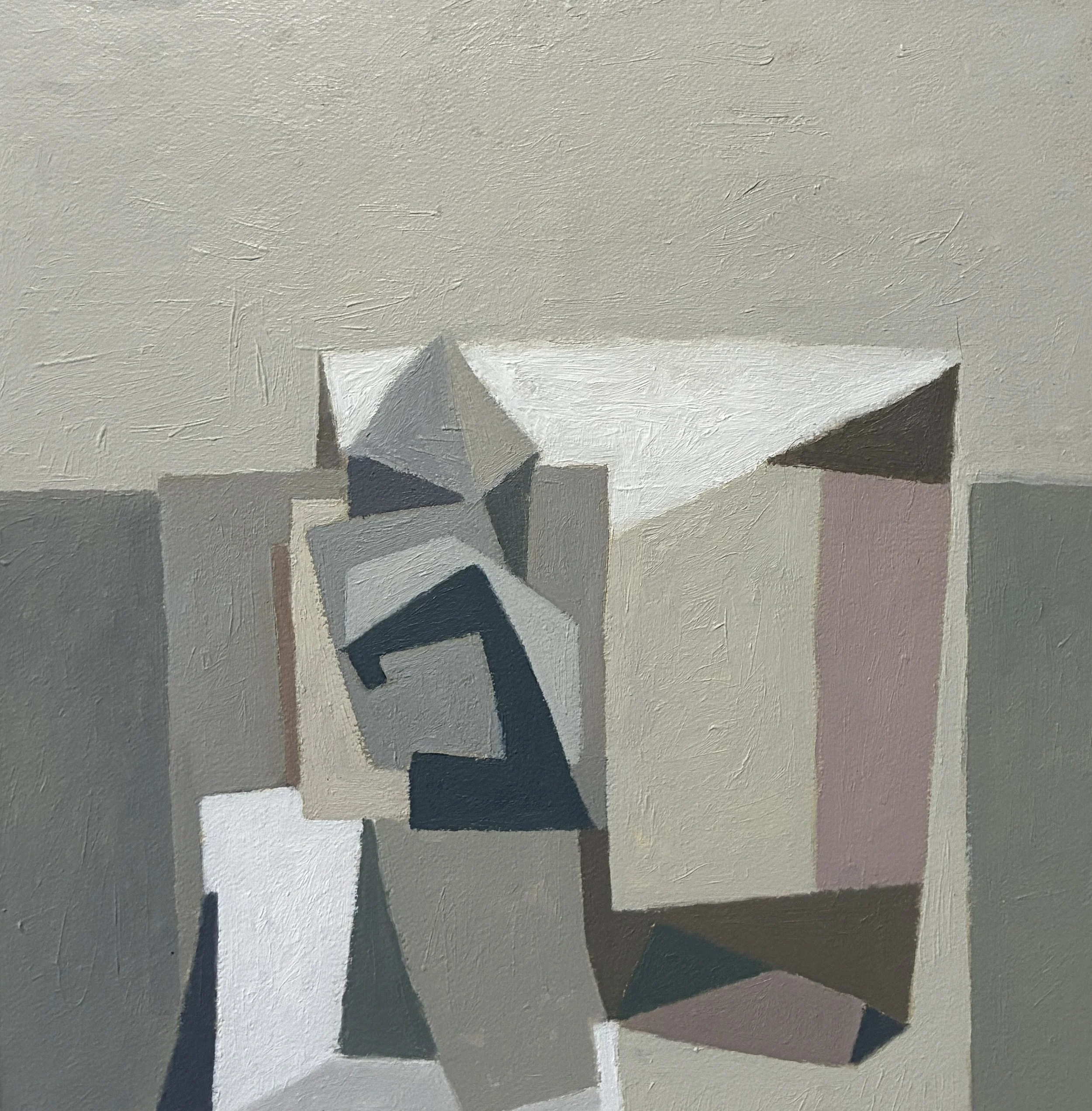
Glen Cebulash, Untitled 5, oil on paper, 13.25” x 12.5”, 2025
Eileen: I suppose I am always a little bit preoccupied by Morandi–apologies for that! Thank you so much for this opportunity to chat. My hope is that these interviews provide a window into each artist’s work on a more personal level, but also as a way to uplift the hard work of painting and to entertain it as an ongoing dialectic between reality (whatever that is for each of us) and abstraction, and wherever we draw the line between them (if such a line even exists). So, thank you for participating in a chat that has done exactly that!
Glen Cebulash: Fabrications is on view from May 19 through June 13, 2026. There is an opening reception on May 21, from 5-8pm.